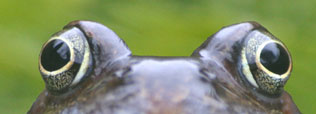

Eucalyptus
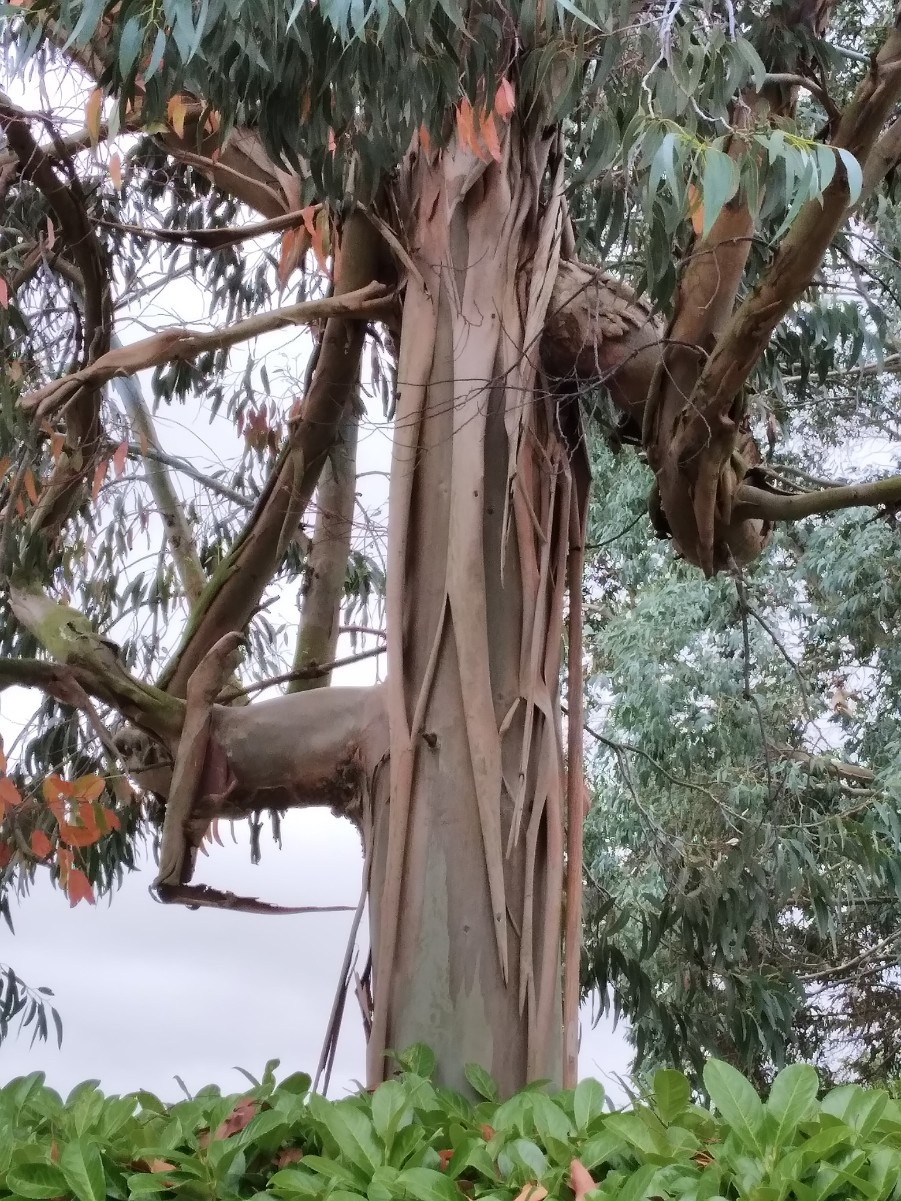
Evergreen trees, with alternate adult leaves that are usually lanceolate and may be curved (falcate). Juvenile leaves are opposite and often of different shape to adult leaves; e.g. rounded and clasping stem. Flowers solitary or in small clusters, with numerous stamens; the petals are united into a hood that covers the unopened flower. Bark often flaking in long strips or patches. Fast-growing, but most species not fully hardy in our area and may die back in cold winters.
See key in Stace (4th edition). The number of flowers in a cluster and the details and measurements of flowers, buds and fruit are used in identification.

Parks and gardens; may increasingly be planted for forestry and 'carbon capture' woodlands.
Introduced from Tasmania and SE Australia; some species self-sow in the southern parts of UK, but rarely.
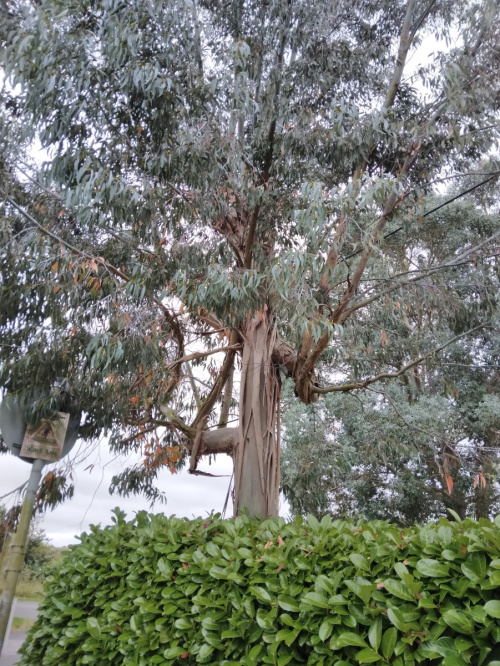 Karaokeking19
Sutton Lane, Sutton Elms
05 August 2024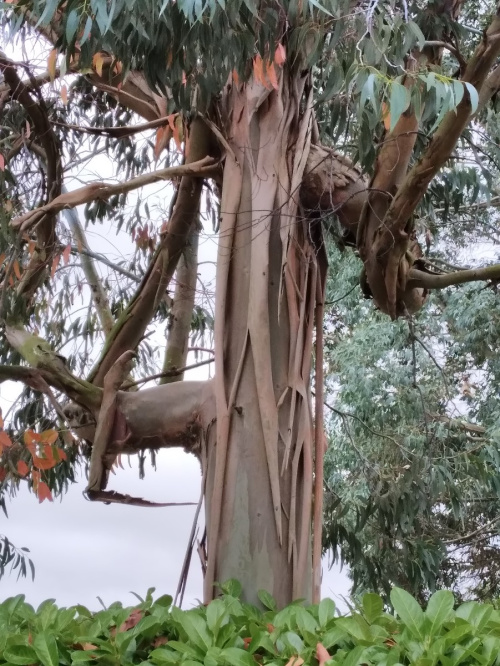 Karaokeking19
Sutton Lane, Sutton Elms
05 August 2024
Leicestershire & Rutland Map
Enter a town or village to see local records
MAP KEY:
Yellow squares = NBN records (all known data)
Coloured circles = NatureSpot records: 2025+ | 2020-2024 | pre-2020
UK Map
Species profile
- Species group:
- flowering plant
- Kingdom:
- Plantae
- Order:
- Myrtales
- Family:
- Myrtaceae
- Records on NatureSpot:
- 2
- First record:
- 05/08/2024 (Poole, Adam)
- Last record:
- 05/03/2025 (Pugh, Dylan)
Total records by month
% of records within its species group
10km squares with records
The latest images and records displayed below include those awaiting verification checks so we cannot guarantee that every identification is correct. Once accepted, the record displays a green tick.
In the Latest Records section, click on the header to sort A-Z, and again to sort Z-A. Use the header boxes to filter the list.