
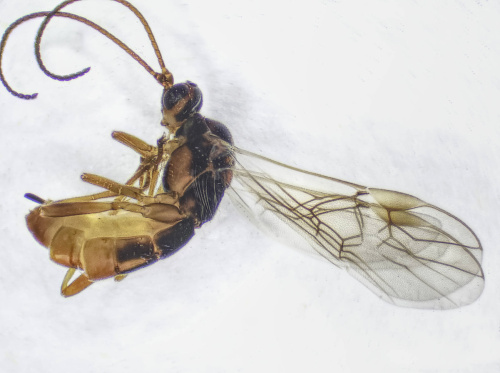
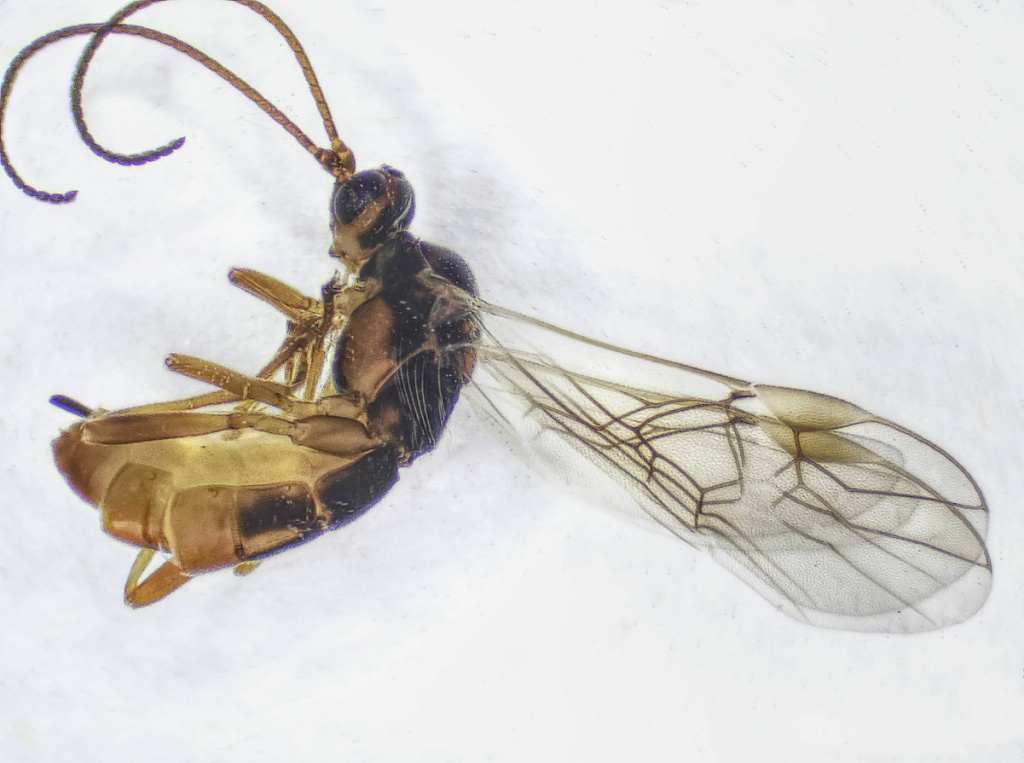
Aleiodes
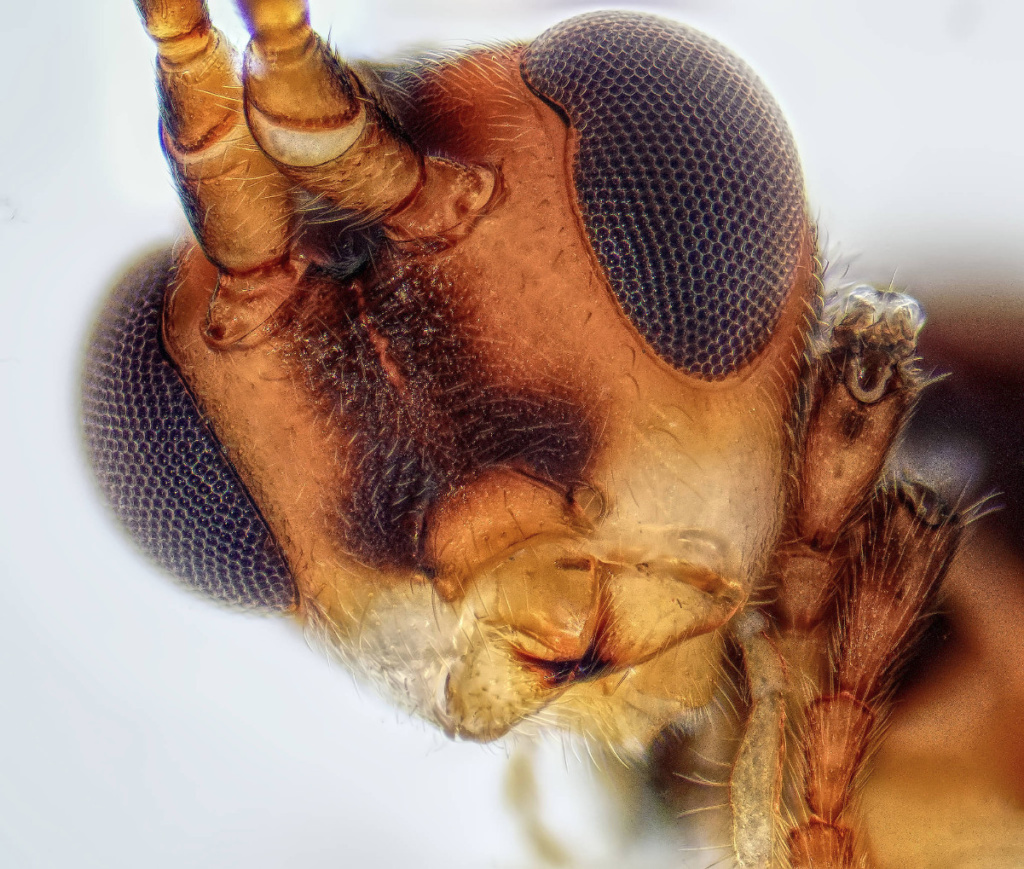
The defining trait of the subfamily is a cyclostome mouth, a circular opening formed by a dorso-ventrally short clypeus and a concave labrum, bordered below by the mandibles. The first three abdominal segments are heavily sculptured, often with longitudinal ridges. Females are distinguished by a short ovipositor (sheaths are usually no longer than the hind basitarsus), making them distinct from other Braconidae groups.
There are thousands of species worldwide with about 40 UK species identified so far.

Unless identified by a recognised expert, a photo is required and the specimen should be examined with a microscope. In the comments box, state the key or ID method used and describe the size and identifying characters.
The females deposits eggs in caterpillars of various species. The eggs hatch and the wasp larva feeds on the caterpillar leaving a hardened skin, or mummy. The wasp pupates within the mummy and eventually the adult breaks out, leaving a small hole in the husk of the caterpillar.
Common and widespread.
Under recorded due to identification difficulty.
 Graham Calow
Sapcote, Harecroft Crescent
06 May 2026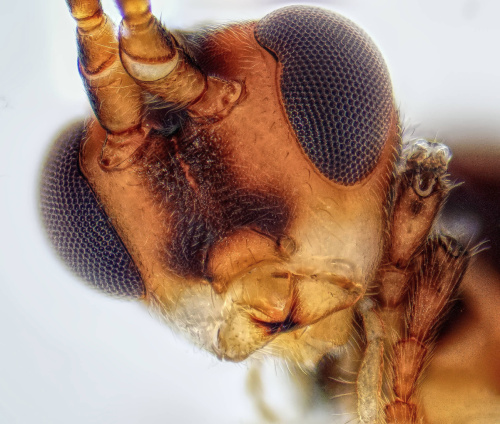 Graham Calow
Sapcote, Harecroft Crescent
06 May 2026
cyclostome mouth
Leicestershire & Rutland Map
Enter a town or village to see local records
MAP KEY:
Yellow squares = NBN records (all known data)
Coloured circles = NatureSpot records: 2025+ | 2020-2024 | pre-2020
UK Map
Species profile
- Species group:
- insect - hymenopteran
- Kingdom:
- Animalia
- Order:
- Hymenoptera
- Family:
- Braconidae
- Records on NatureSpot:
- 3
- First record:
- 21/04/2011 (Calow, Graham)
- Last record:
- 06/05/2026 (Calow, Graham)
Total records by month
% of records within its species group
10km squares with records
The latest images and records displayed below include those awaiting verification checks so we cannot guarantee that every identification is correct. Once accepted, the record displays a green tick.
In the Latest Records section, click on the header to sort A-Z, and again to sort Z-A. Use the header boxes to filter the list.