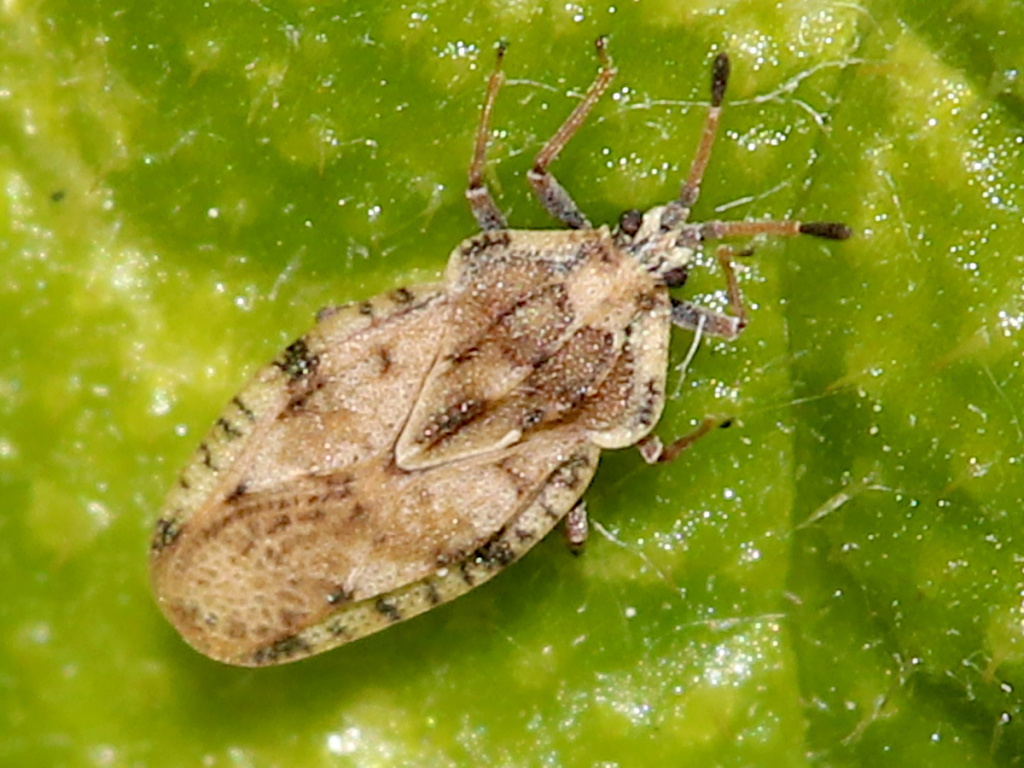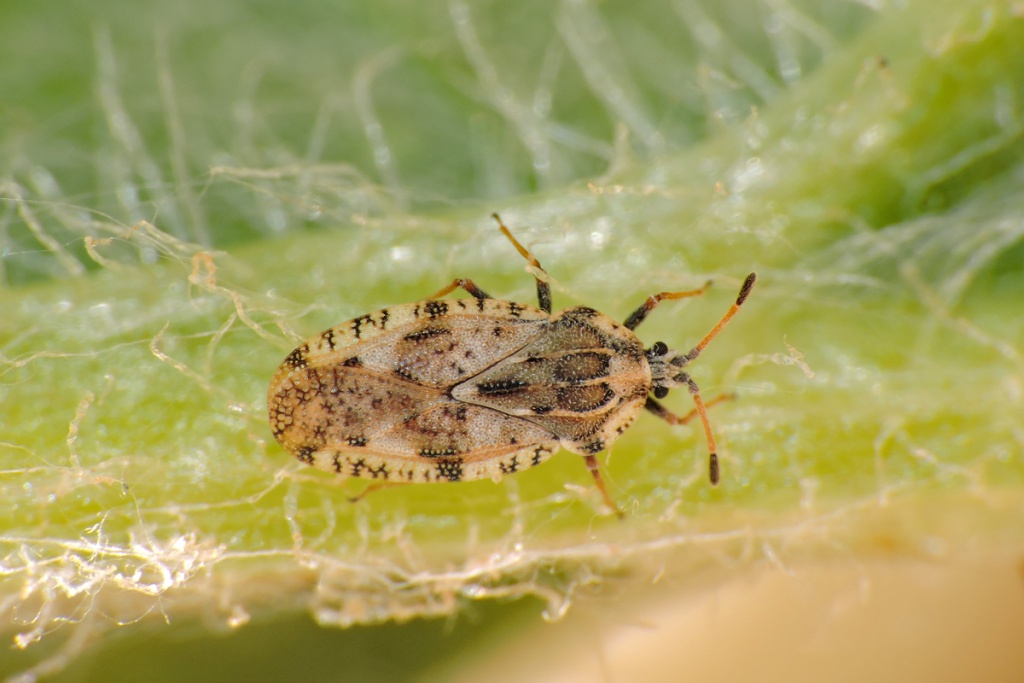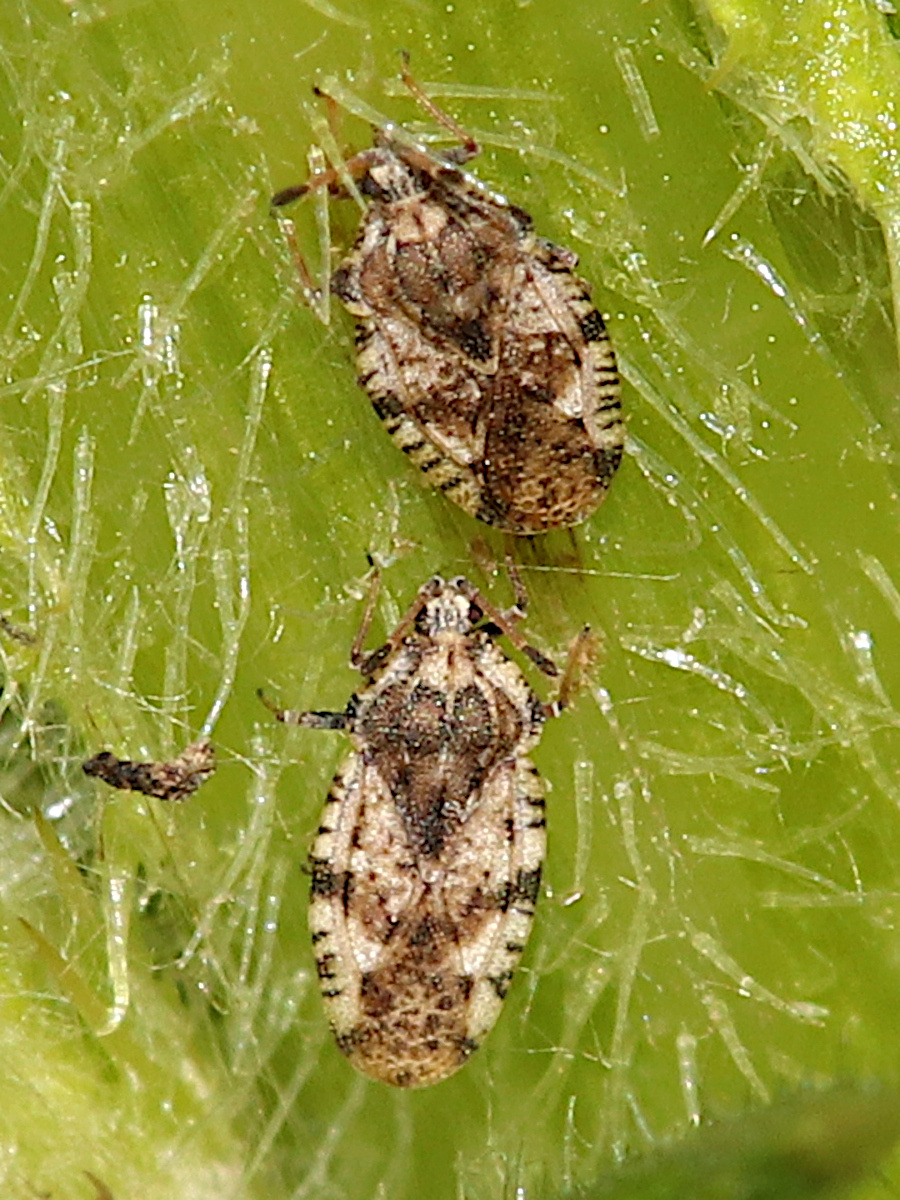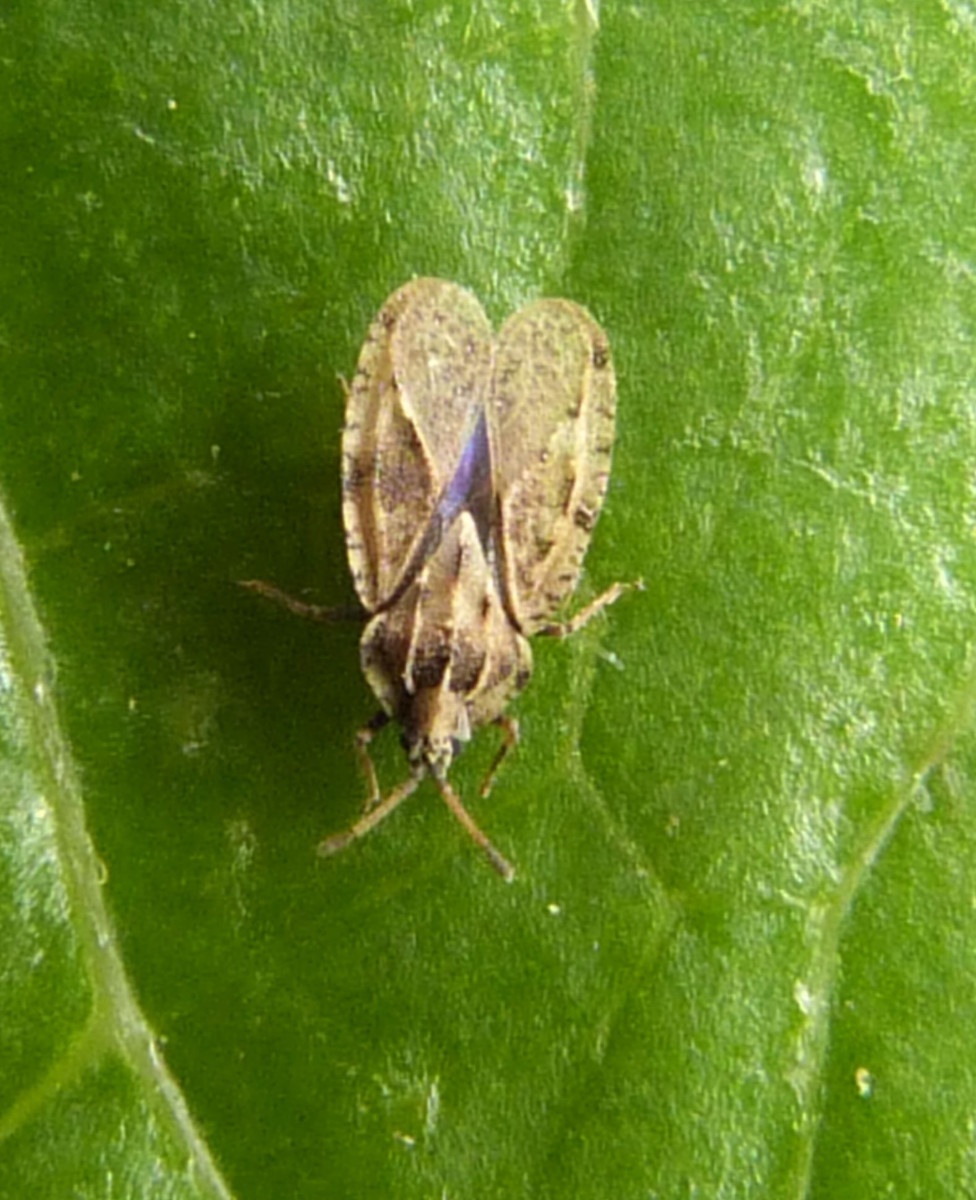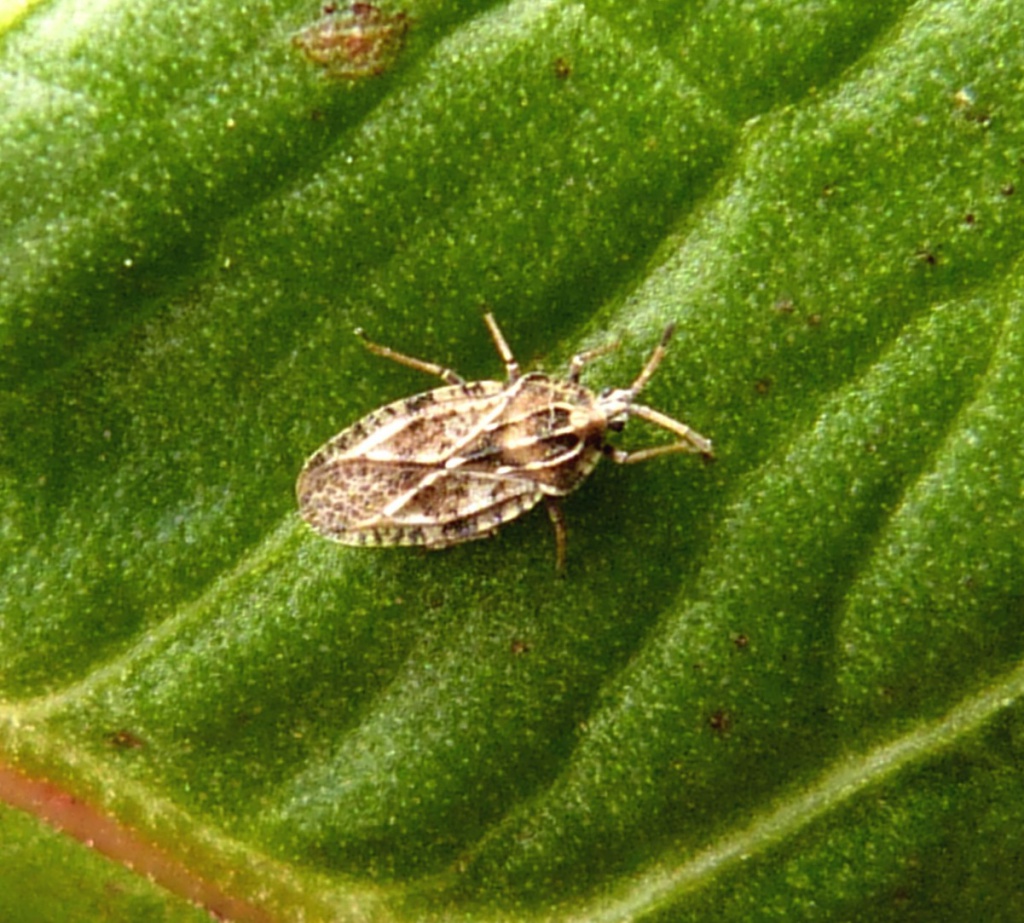

Spear Thistle Lacebug - Tingis cardui
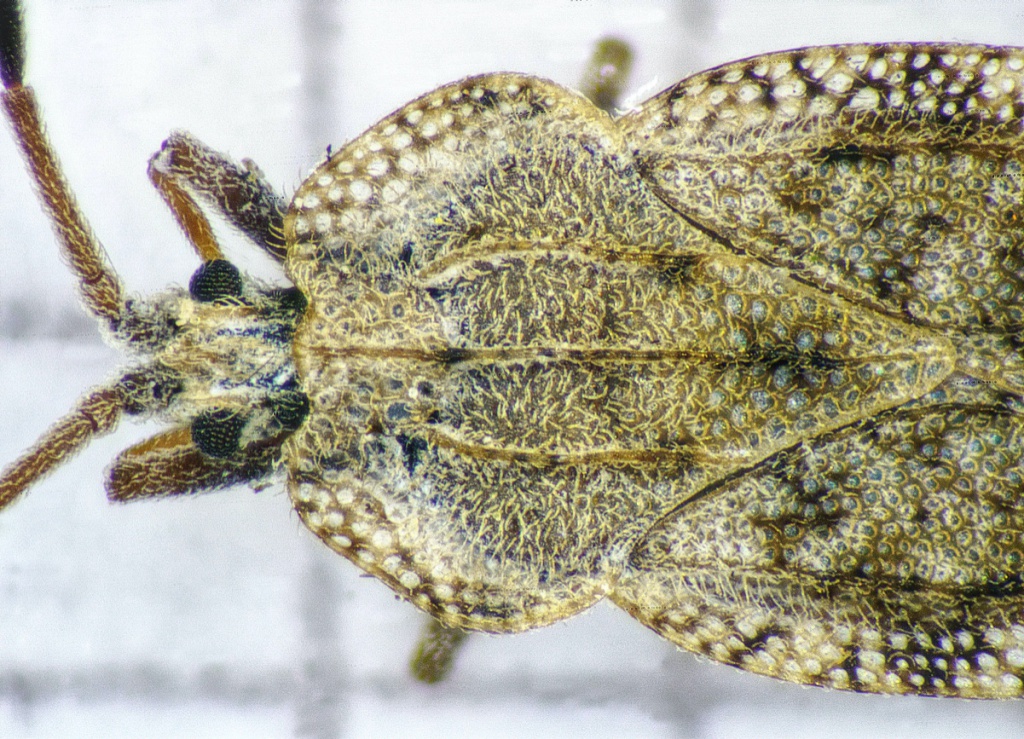
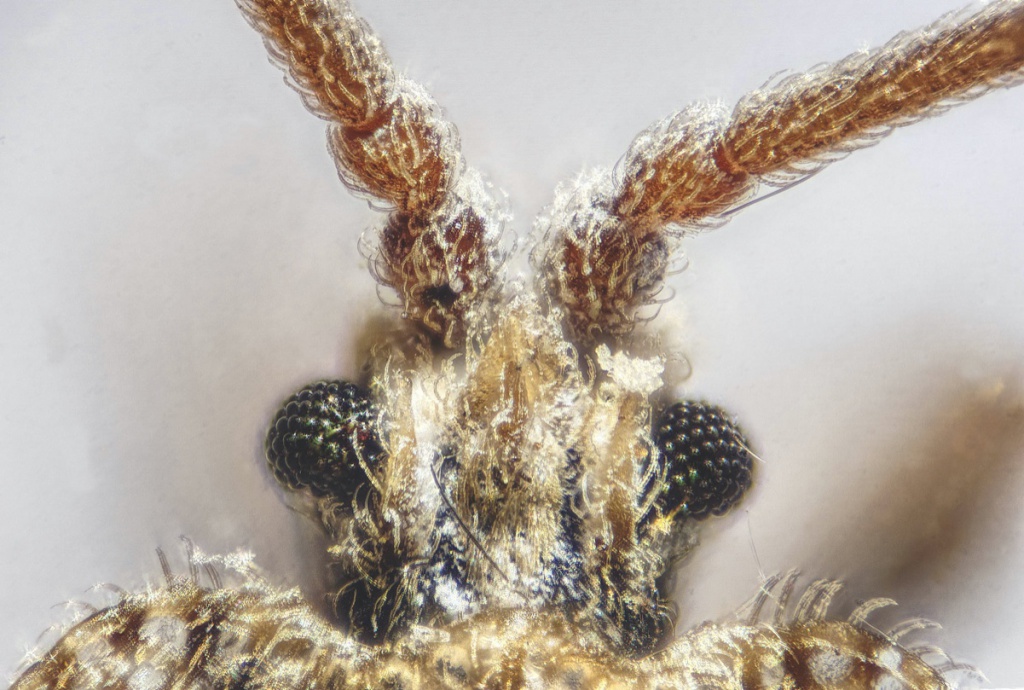
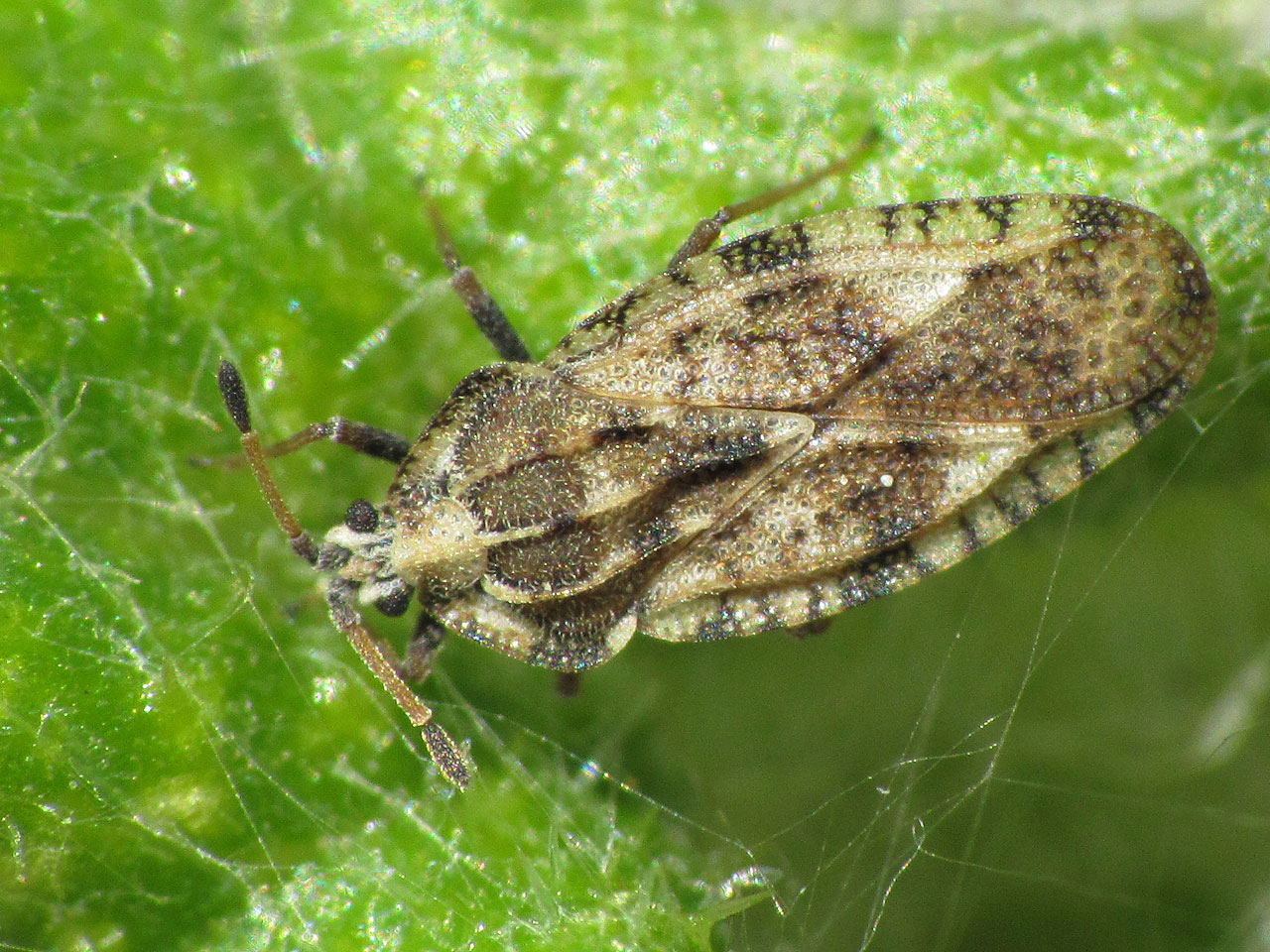
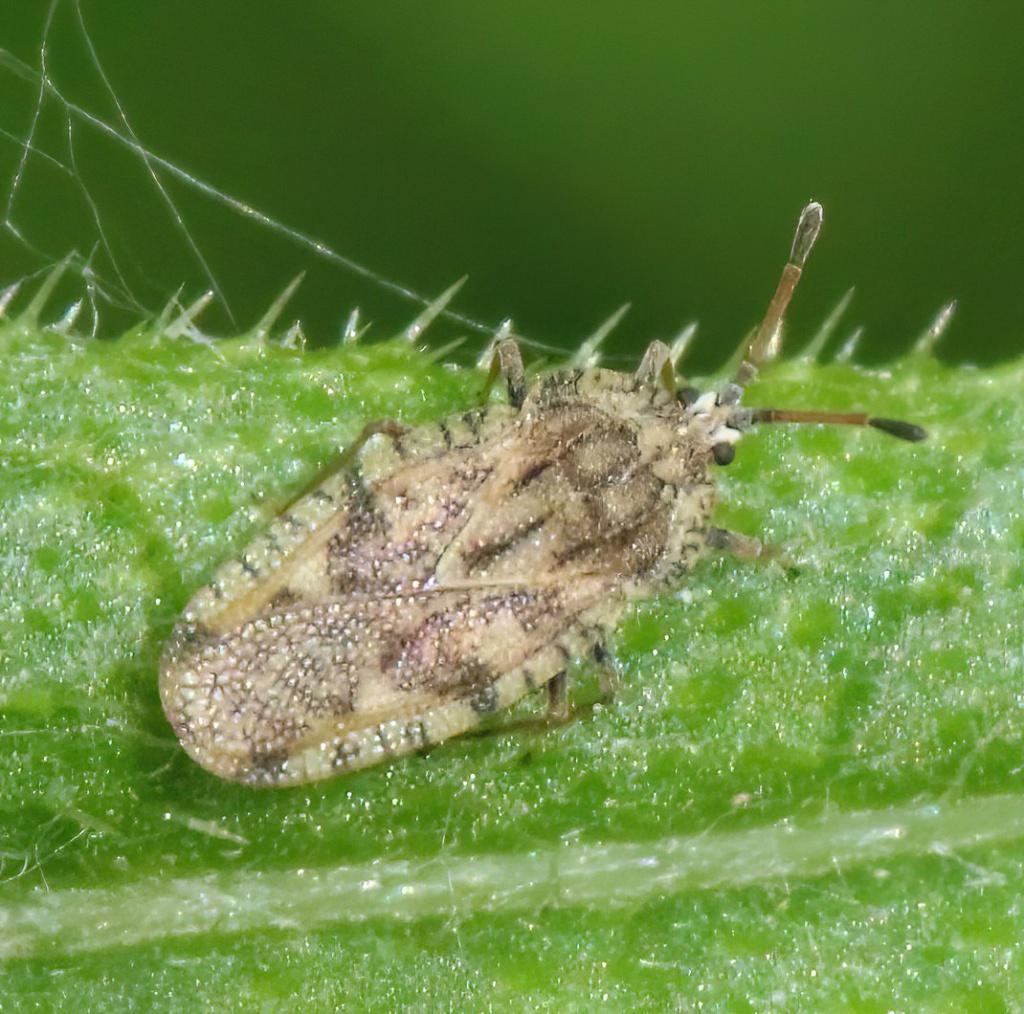
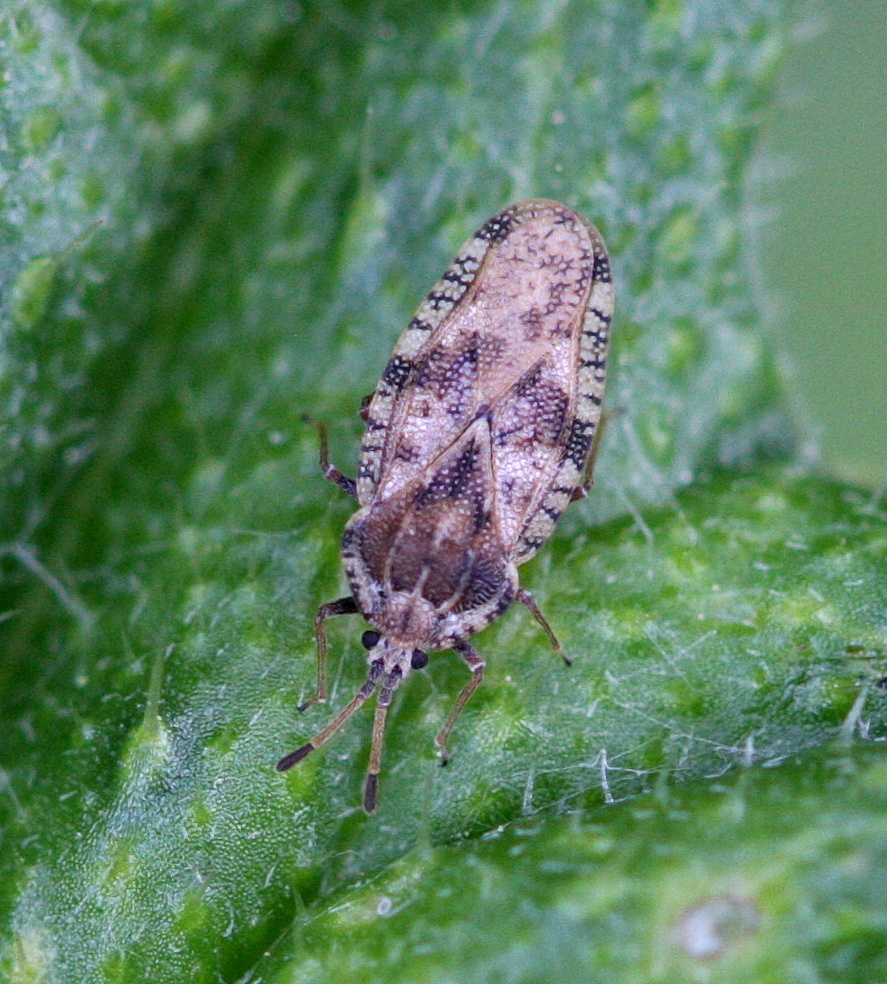
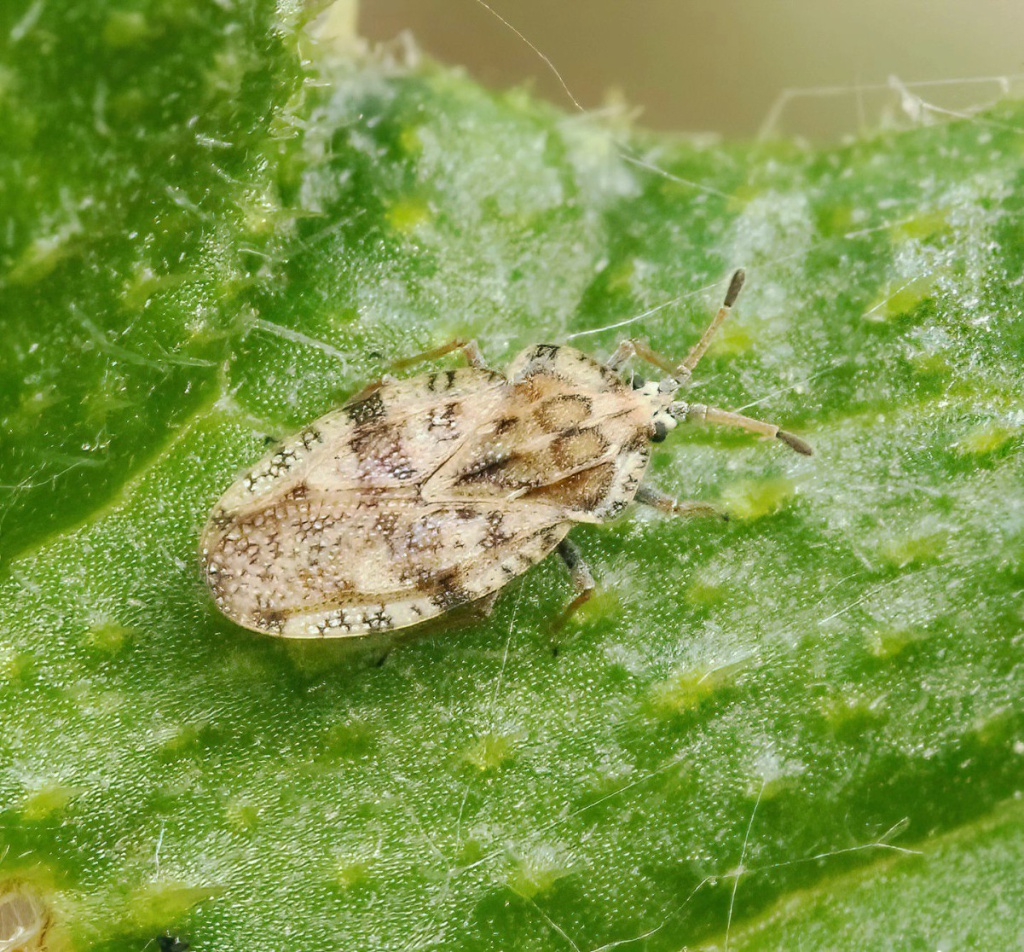
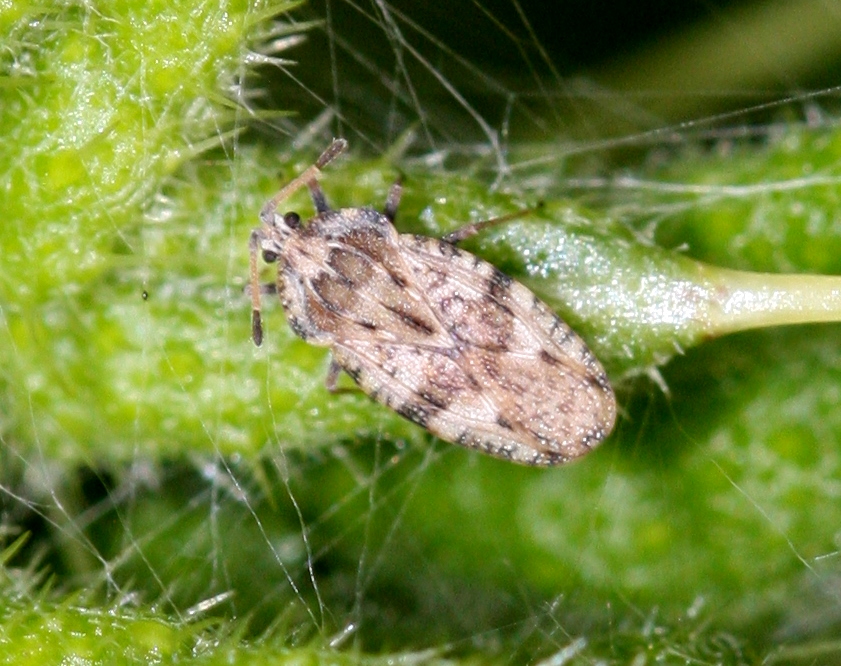
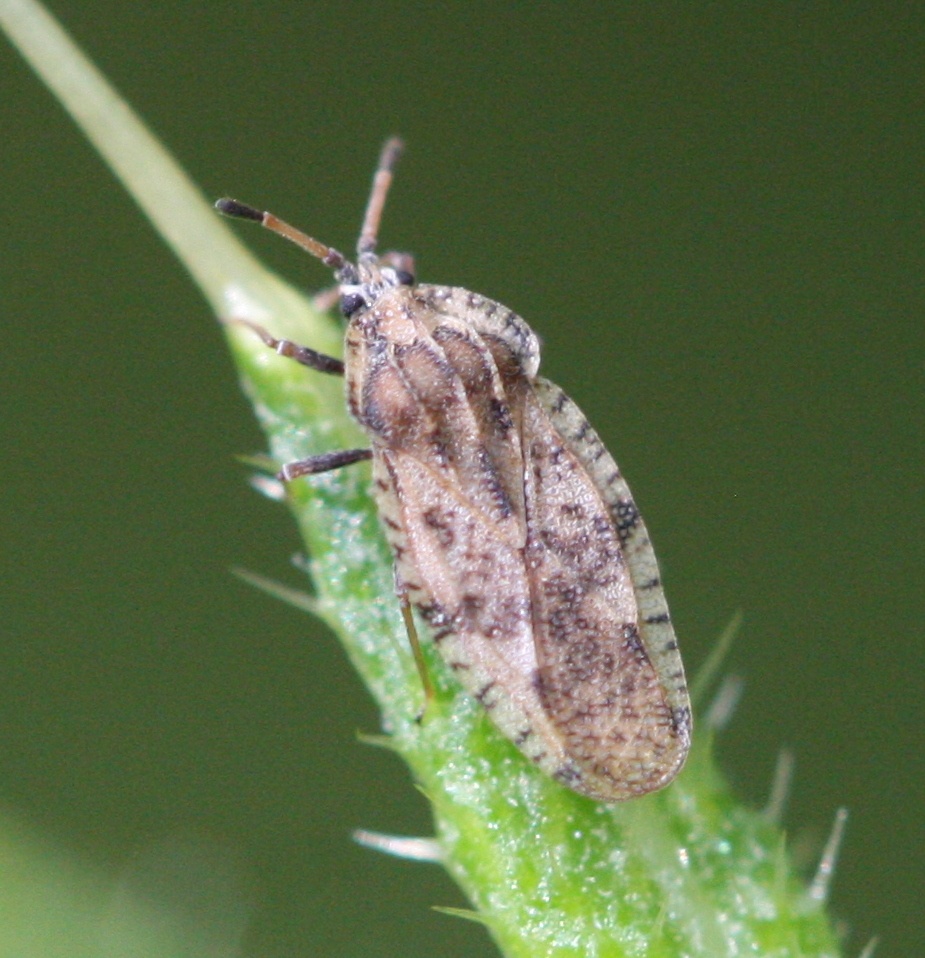
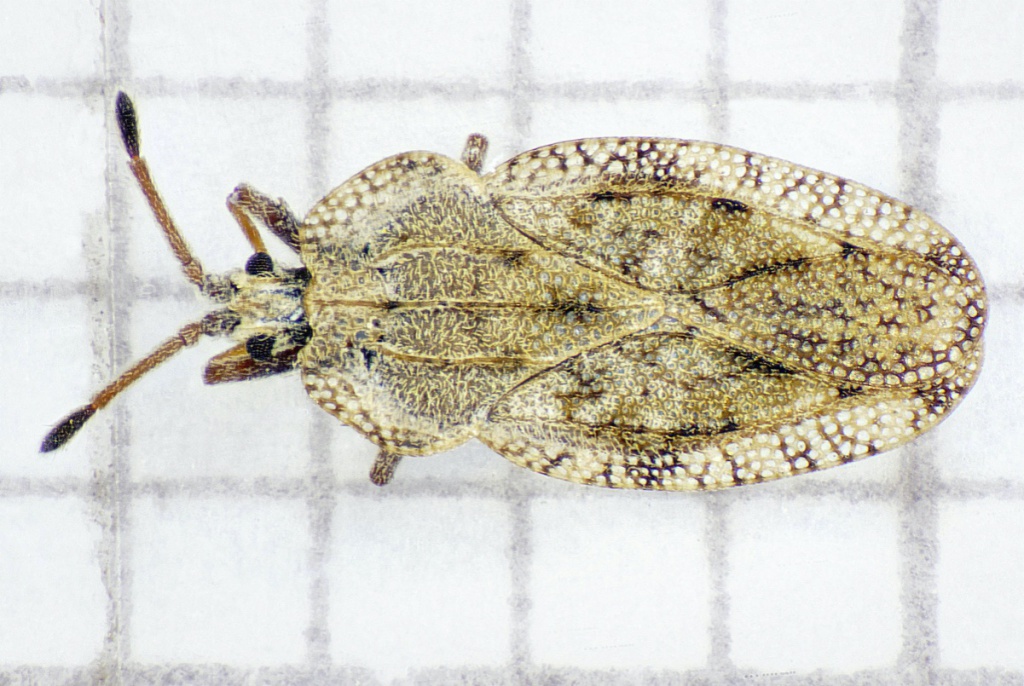
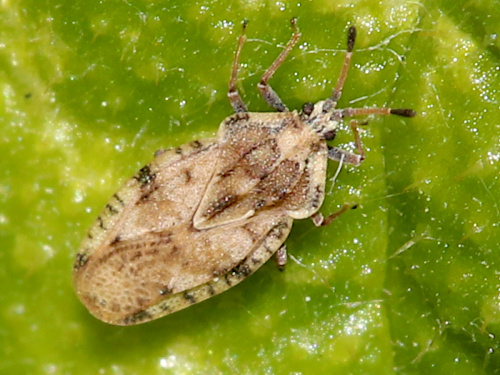
Length 3-4 mm. Tingis species are grey-brown lacebugs which are covered in white powdery deposits made of wax. The 4th antennal segment is clearly broader than 3rd and there are three frontal processes (small projections arising from the front of the head between the antennae). They are always fully-winged. It is distinguished by the black-tipped antennae and tibiae and by the 2-3 rows of meshes at the edge of the pronotum and along the margins of the forewings. The two projections arising just behind the eyes (occipital processes) are very short, and do not extend beyond the frontal processes.
Tingis ampliata is very similar and best distinguished by noting the host plant (Creeping Thistle).

Can be identified by external structure at 5-10X magnification.
Anywhere that Spear Thistle the host plant grows.
Adult: All year round
Overwinters as an adult and lays eggs on the foodplant Spear Thistle in the spring and early summer. Larvae June-September; the new adult generation is complete from July onwards.
Fairly common throughout most of Britain
Fairly frequent in Leicestershire and Rutland.
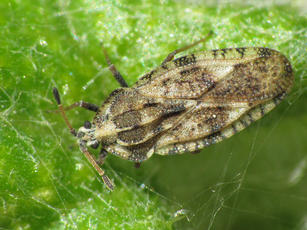 David Gould
Croft Hill
17 June 2010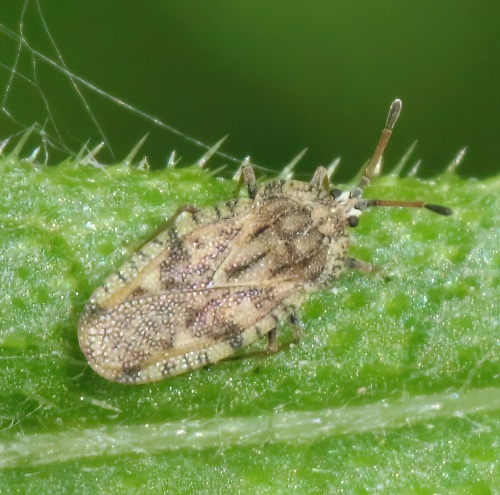 Ian Harding
Woodcote Wood
16 June 2022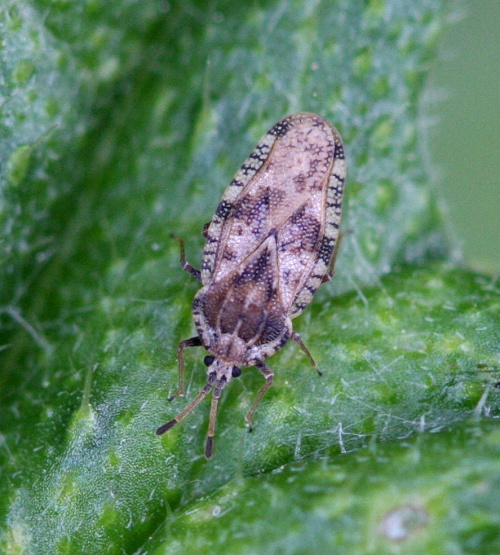 David Nicholls
Lea Meadows
22 May 2015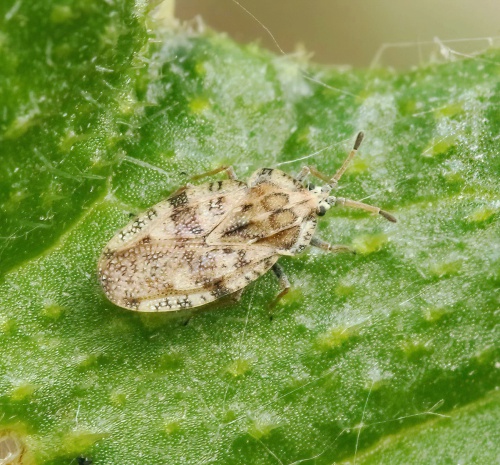 Ian Harding
QE2 Diamond Jubilee Wood, Normanton
06 May 2022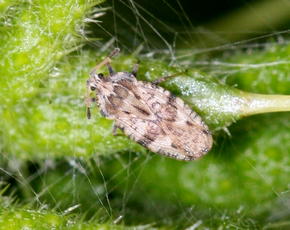 David Nicholls
Rutland Water
27 May 2011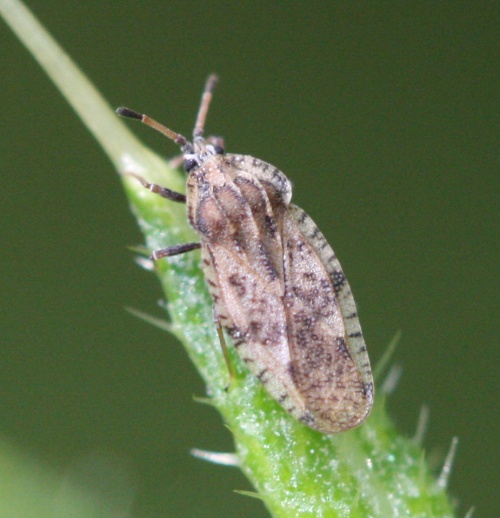 David Nicholls
Nature Alive, Coalville
12 July 2012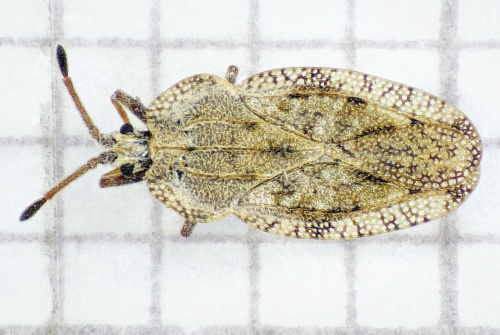 AJ Cann
Lutterworth Country Park
30 April 2021
Leicestershire & Rutland Map
Enter a town or village to see local records
MAP KEY:
Yellow squares = NBN records (all known data)
Coloured circles = NatureSpot records: 2025+ | 2020-2024 | pre-2020
UK Map
Species profile
- Common names
- Spear Thistle Lacebug
- Species group:
- insect - true bug (Hemiptera)
- Kingdom:
- Animalia
- Order:
- Hemiptera
- Family:
- Tingidae
- Records on NatureSpot:
- 76
- First record:
- 18/04/2010 (Calow, Graham)
- Last record:
- 10/04/2026 (Dejardin, Andrew)
Total records by month
% of records within its species group
10km squares with records
The latest images and records displayed below include those awaiting verification checks so we cannot guarantee that every identification is correct. Once accepted, the record displays a green tick.
In the Latest Records section, click on the header to sort A-Z, and again to sort Z-A. Use the header boxes to filter the list.
Latest images
Latest records
 Mike Higgott
Anstey, Link Road Playing Fields 5
21 May 2023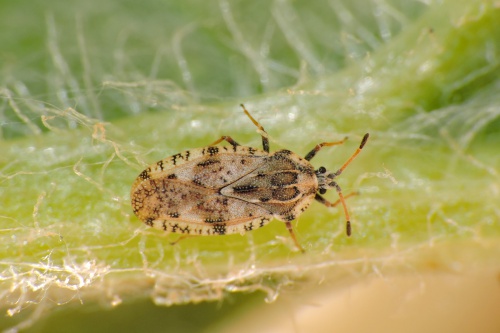 Mark Skevington
Whetstone
20 May 2020 AJ Cann
Lutterworth Country Park
30 April 2021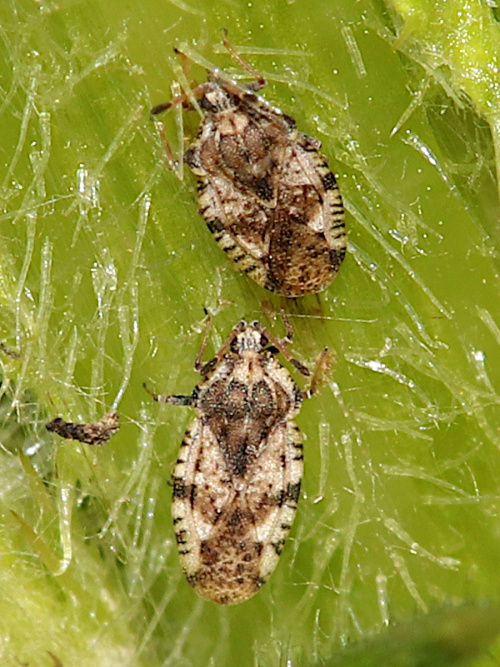 Mike Higgott
Anstey
03 June 2023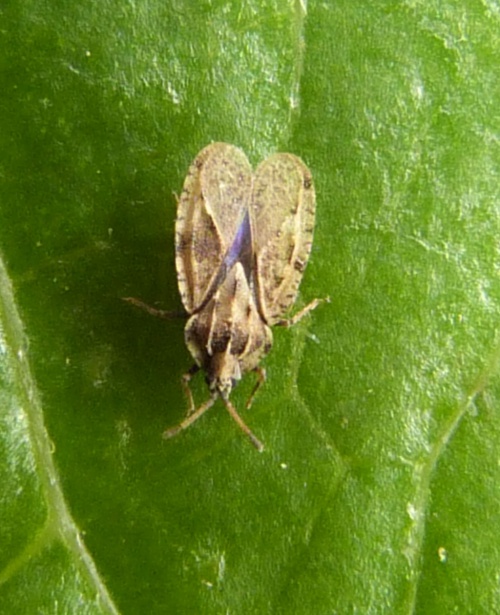 Graham Calow
Sapcote
09 June 2013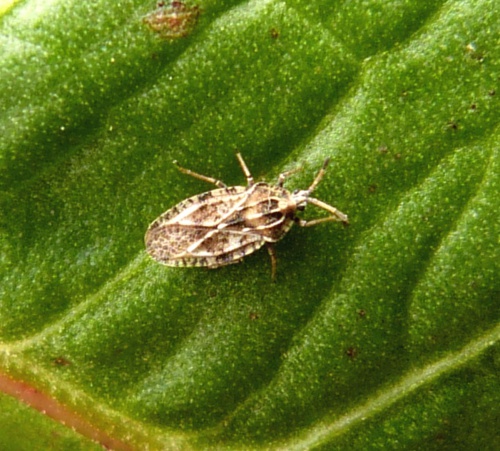 Graham Calow
Sapcote
28 April 2014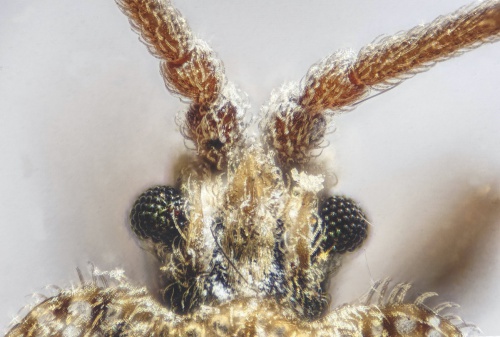 AJ Cann
Lutterworth Country Park
30 April 2021