Phaenocarpa
Phaenocarpa
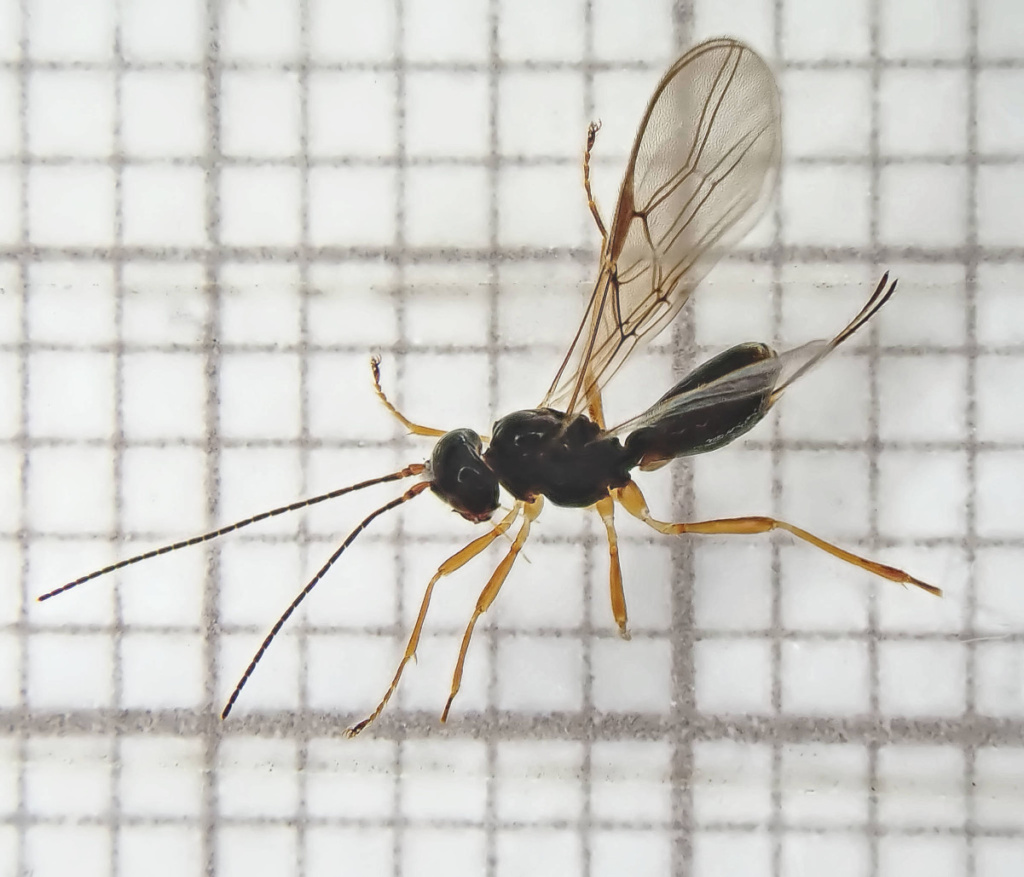
Typically 2-5mm body length. Colours range from polished black or dark brown to orange, reddish-brown, or bi-colored combinations. Like other Alysiinae, Phaenocarpa possesses non-overlapping, outward-facing (exodont) mandibles armed with 3 distinct teeth (tridentate). When closed, the tips point laterally/outwardly rather than touching at the midline. Forewing vein r-m is present (closing the second submarginal cell), separating it from genera where this vein is completely absent. Pterostigma typically long, narrow, or moderately expanded depending on the subgenus. First abdominal tergite distinctly sculptured (striate or rugose). Ovipositor sheath noticeably exerted in females, varying from slightly shorter than the hind tibia to significantly longer than the entire metasoma depending on the target host microhabitat.

Unless identified by a recognised expert, a photo is required and the specimen should be examined with a microscope. In the comments box, state the key or ID method used and describe the size and identifying characters.
All Phaenocarpa species are solitary koinobiont endoparasitoids of Diptera (true flies). The female oviposits into a live host larva. The host continues to feed, grow, and complete its development into a puparium before the parasitoid larva kills it. They attack larvae from a wide variety of dipteran families, particularly those living in rich organic substrates (decaying vegetation, dung, fungi, or leaf mines) such as Anthomyiidae (root-maggot flies), Scathophagidae (dung flies), Drosophilidae (fruit flies), Muscidae, Sciomyzidae, Agromyzidae, and Syrphidae. The specialized exodont mandibles function as an escape tool. When the adult wasp is ready to emerge from the host's hardened puparium, it presses its outward-pointing teeth against the inner puparial shell and expands them outward to tear/cut an exit hole.
Unknown.
Unknown.
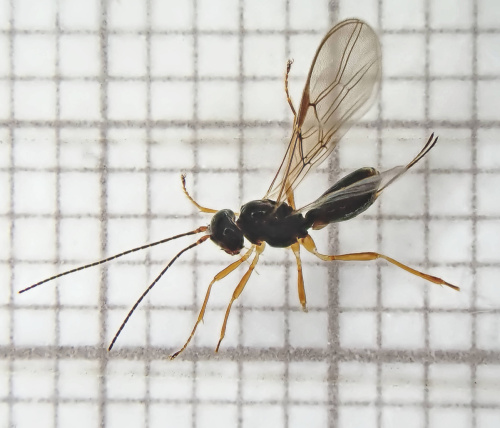 Graham Calow
Sapcote, Harecroft Crescent
31 October 2026
specimen examined
Leicestershire & Rutland Map
Enter a town or village to see local records
MAP KEY:
Yellow squares = NBN records (all known data)
Coloured squares = NatureSpot records: 2025+ | 2020-2024 | pre-2020
UK Map
Additional images
No additional images available for this species.