
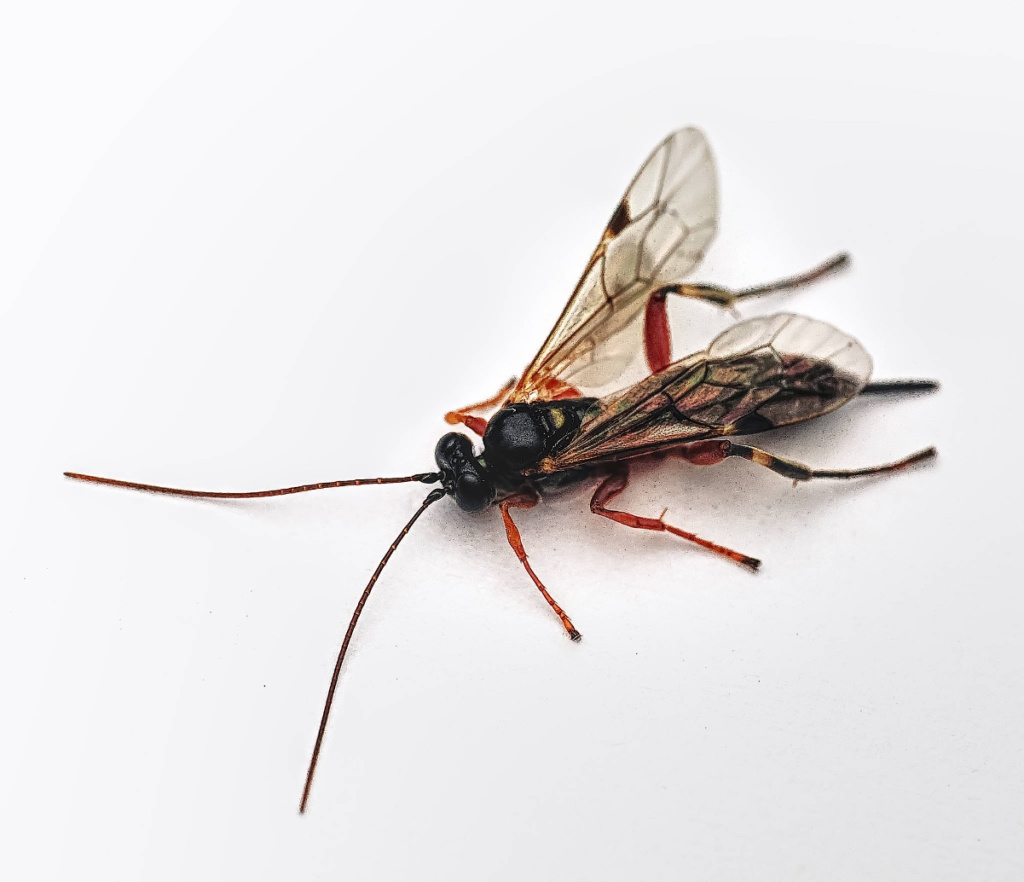
Pimpla insignatoria
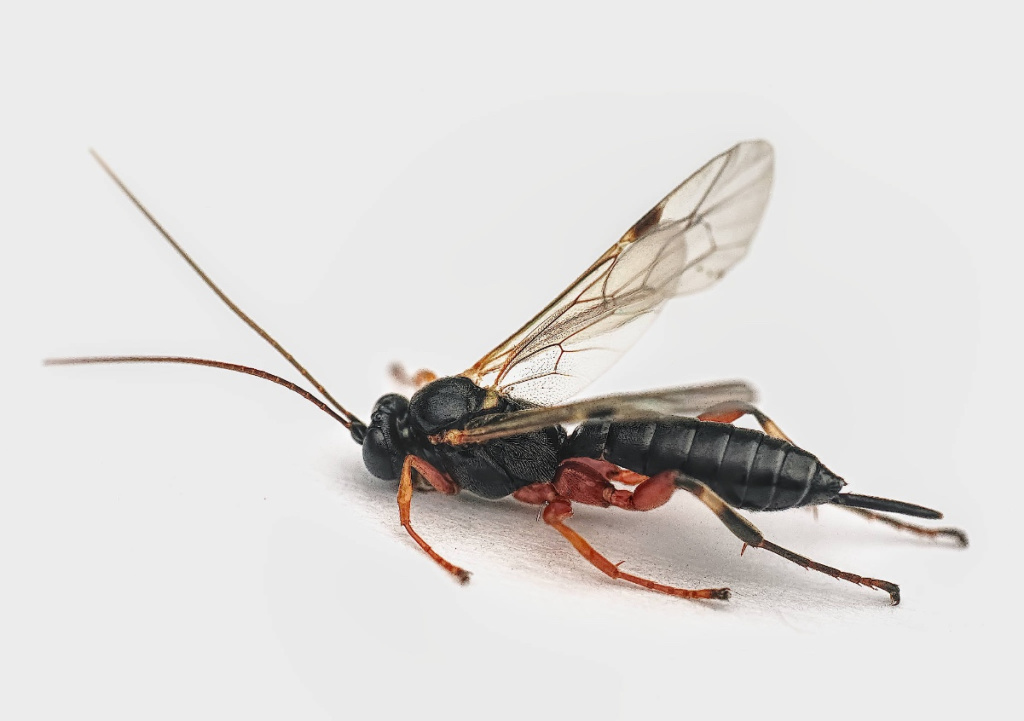
The body is entirely shiny black, including a solid black face with no white or yellow markings; legs are predominantly bright orange. Females have a thick, prominent, and completely straight ovipositor projecting from the rear. It lacks the downward-curved tip seen in lookalike genera like Apechthis. Males of the Pimpla genus are incredibly difficult to distinguish from one another without microscopic examination of the genitalia.
Easily confused with the highly common Pimpla rufipes. To tell them apart under magnification, look at the color bands on the hind tibia and the precise placement of the tiny breathing pores (spiracles) on the abdomen.

Unless identified by a recognised expert, a photo is required and the specimen should be examined with a microscope. In the comments box, state the key or ID method used and describe the size and identifying characters.
Idiobiont endoparasitoid targeting the pupae (chrysalises) of moths and butterflies.
Widespread.
Unknown.
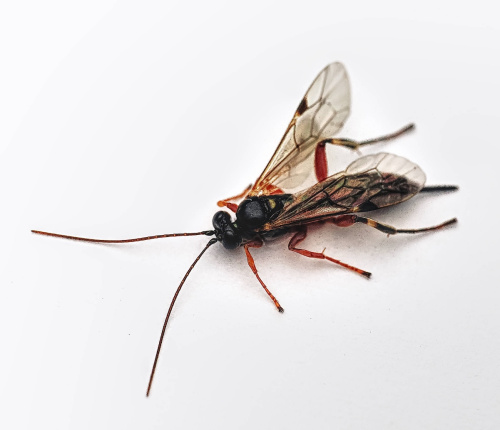 AJ Cann
Croft
31 July 2026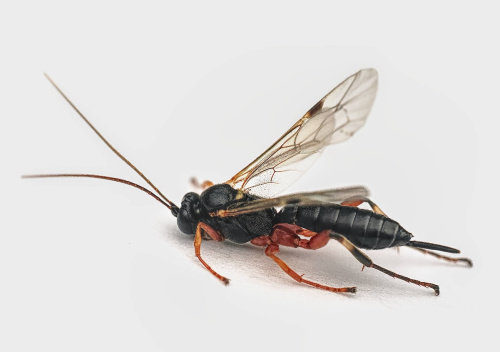 AJ Cann
Croft
31 July 2026
Leicestershire & Rutland Map
Enter a town or village to see local records
MAP KEY:
Yellow squares = NBN records (all known data)
Coloured circles = NatureSpot records: 2025+ | 2020-2024 | pre-2020
UK Map
Species profile
- Species group:
- insect - hymenopteran
- Kingdom:
- Animalia
- Order:
- Hymenoptera
- Family:
- Ichneumonidae
- Records on NatureSpot:
- 1
- First record:
- 31/07/2026 (Cann, Alan)
- Last record:
- 31/07/2026 (Cann, Alan)
Total records by month
% of records within its species group
10km squares with records
The latest images and records displayed below include those awaiting verification checks so we cannot guarantee that every identification is correct. Once accepted, the record displays a green tick.
In the Latest Records section, click on the header to sort A-Z, and again to sort Z-A. Use the header boxes to filter the list.