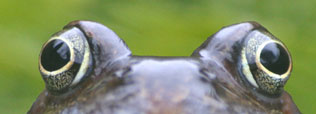

Rhopalapion longirostre
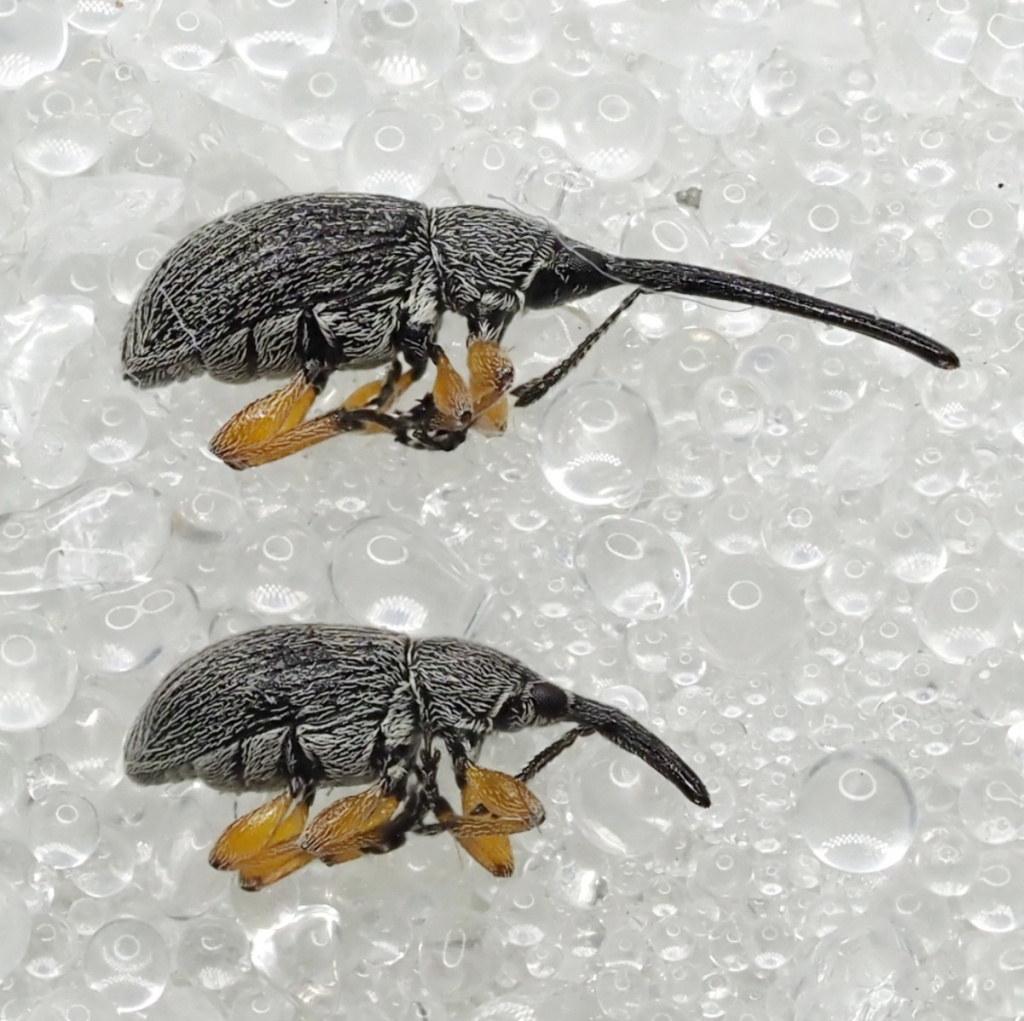
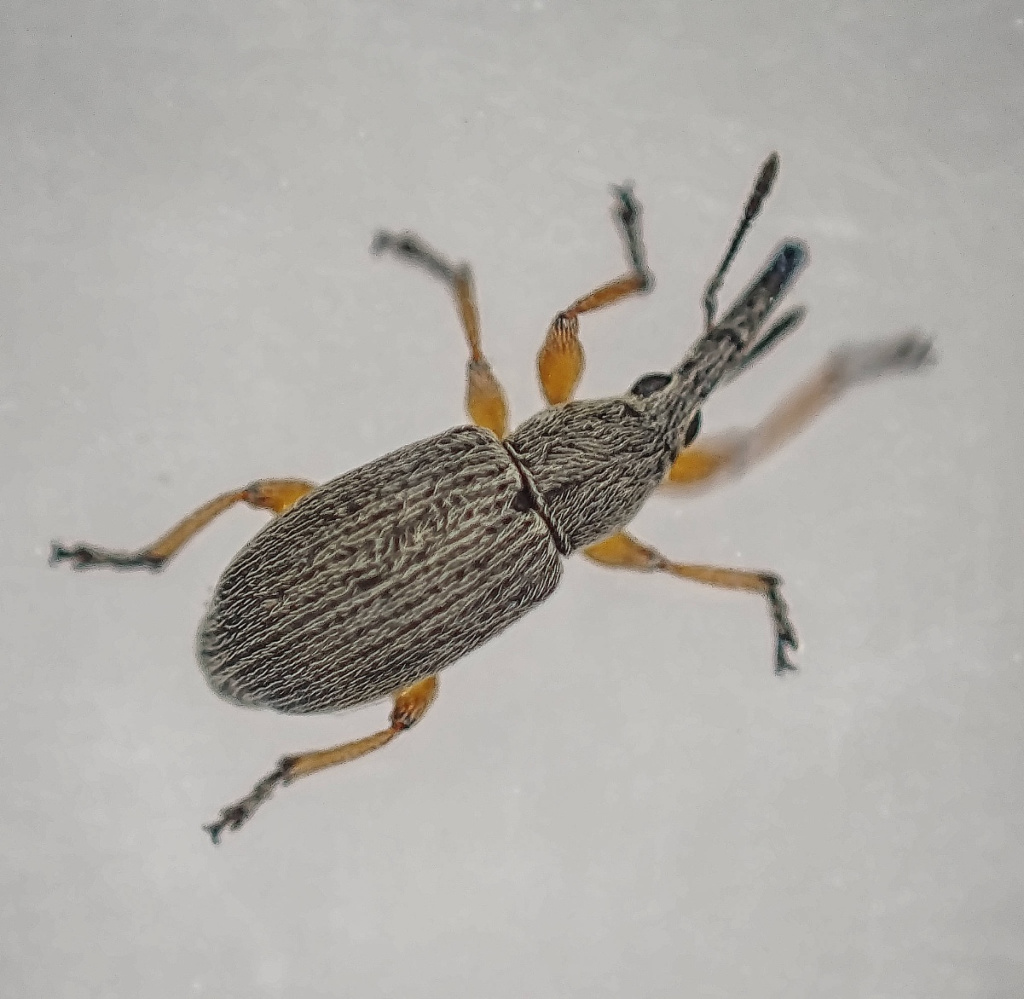
Length 2.5-3.75mm. Grey dark body with orangish-colored legs. Long, slender rostrum (snout), antennae are jointed and positioned halfway along the snout.

Unless identified by a recognised expert, a photo is required.
Prefers plants in the mallow family (Malvaceae), with hollyhock (Alcea rosea) being the most commonly utilized host. Often found in gardens, on road verges and disturbed areas.
Females use their long rostrum (snout) to drill through the thick sepals and lay eggs deep inside flower buds. Larvae hatch inside the buds, migrate to the ovary, and consume developing seeds before pupating inside the seedpod. Adults typically overwinter in soil and debris.
First recorded in the UK in 1987 but now widespread in southeast England. Originally native to southern and southeastern Europe and Asia Minor.
Uncommon.
 AJ Cann
Evington Hilltop Allotments
22 May 2026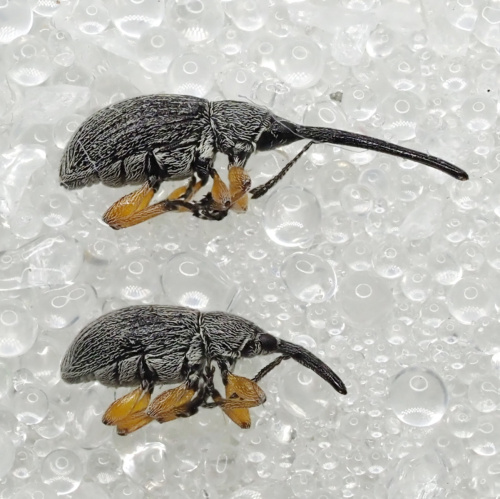 David Nicholls
Evington Hill Top allotments
22 May 2026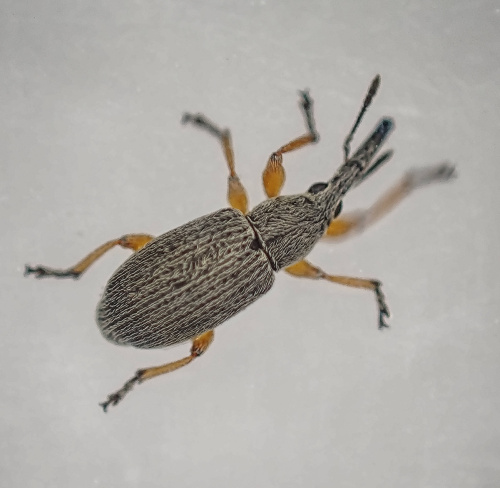 AJ Cann
Evington Hilltop Allotments
22 May 2026

Leicestershire & Rutland Map
Enter a town or village to see local records
MAP KEY:
Yellow squares = NBN records (all known data)
Coloured circles = NatureSpot records: 2025+ | 2020-2024 | pre-2020
UK Map
Species profile
- Common names
- Hollyhock Weevil
- Species group:
- insect - beetle (Coleoptera)
- Kingdom:
- Animalia
- Order:
- Coleoptera
- Family:
- Apionidae
- Records on NatureSpot:
- 2
- First record:
- 22/05/2026 (Nicholls, David)
- Last record:
- 22/05/2026 (Nicholls, David)
Total records by month
% of records within its species group
10km squares with records
The latest images and records displayed below include those awaiting verification checks so we cannot guarantee that every identification is correct. Once accepted, the record displays a green tick.
In the Latest Records section, click on the header to sort A-Z, and again to sort Z-A. Use the header boxes to filter the list.