
Pteromalus
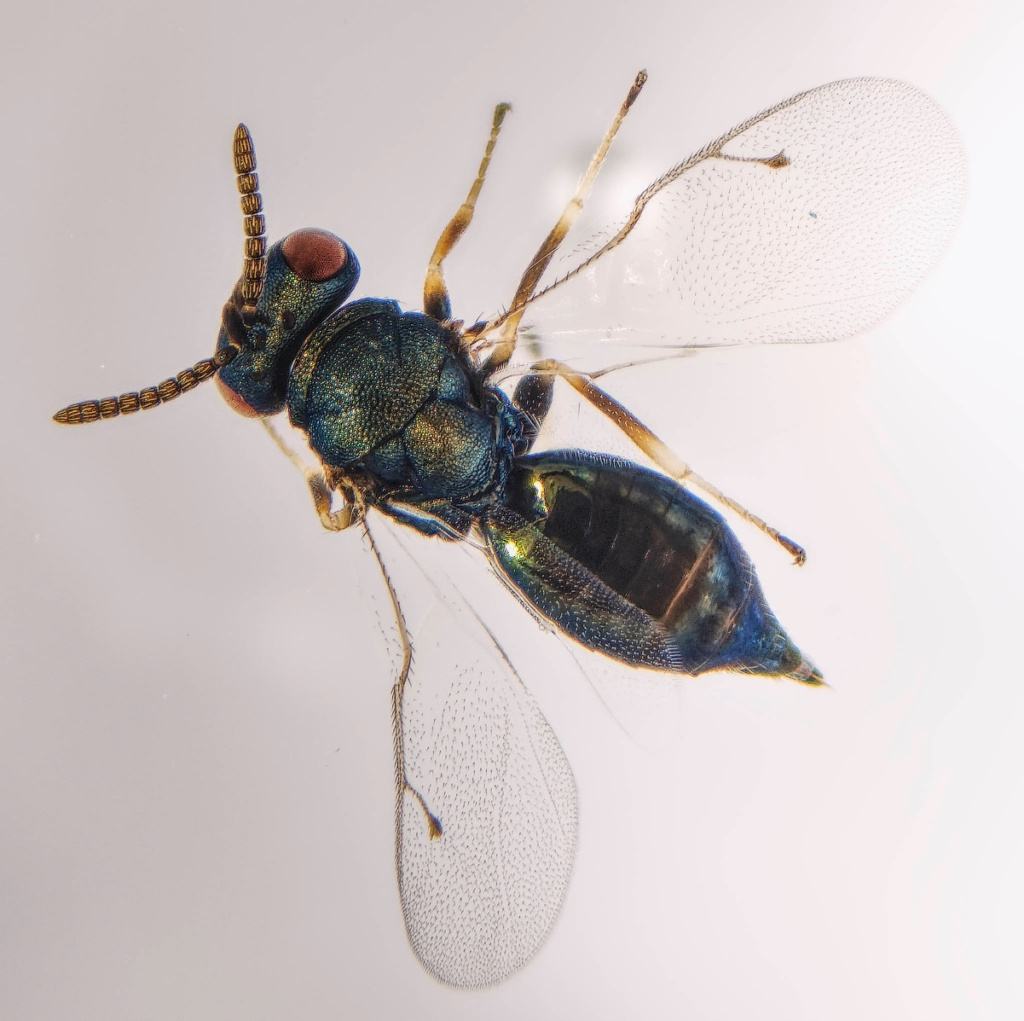
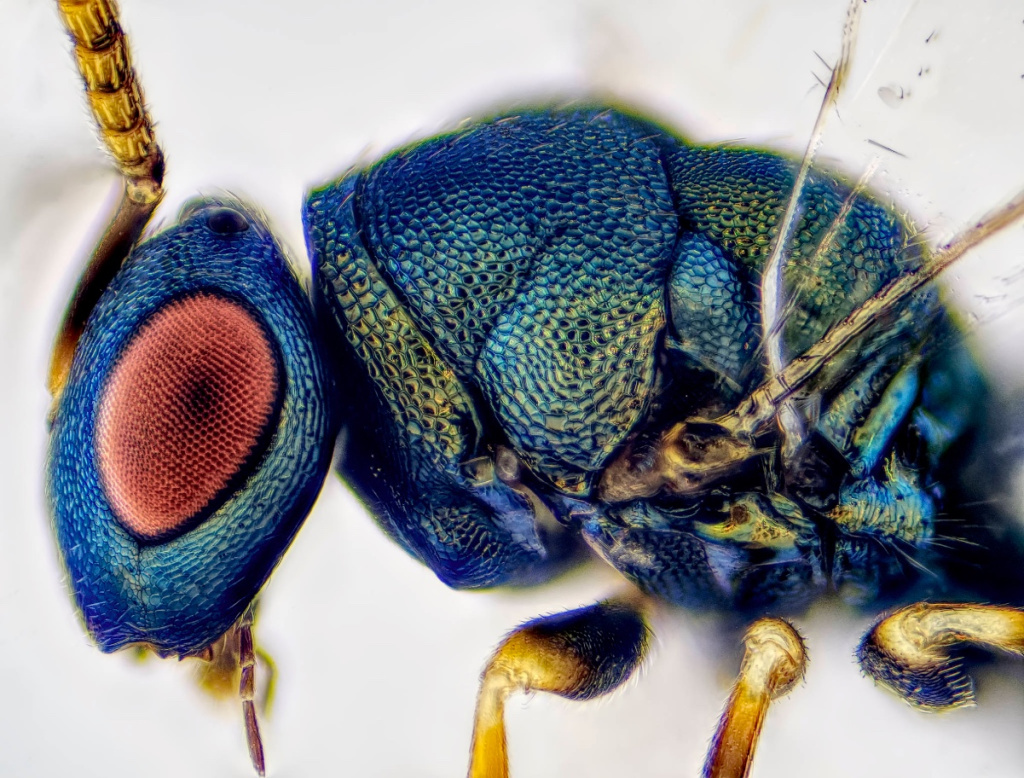
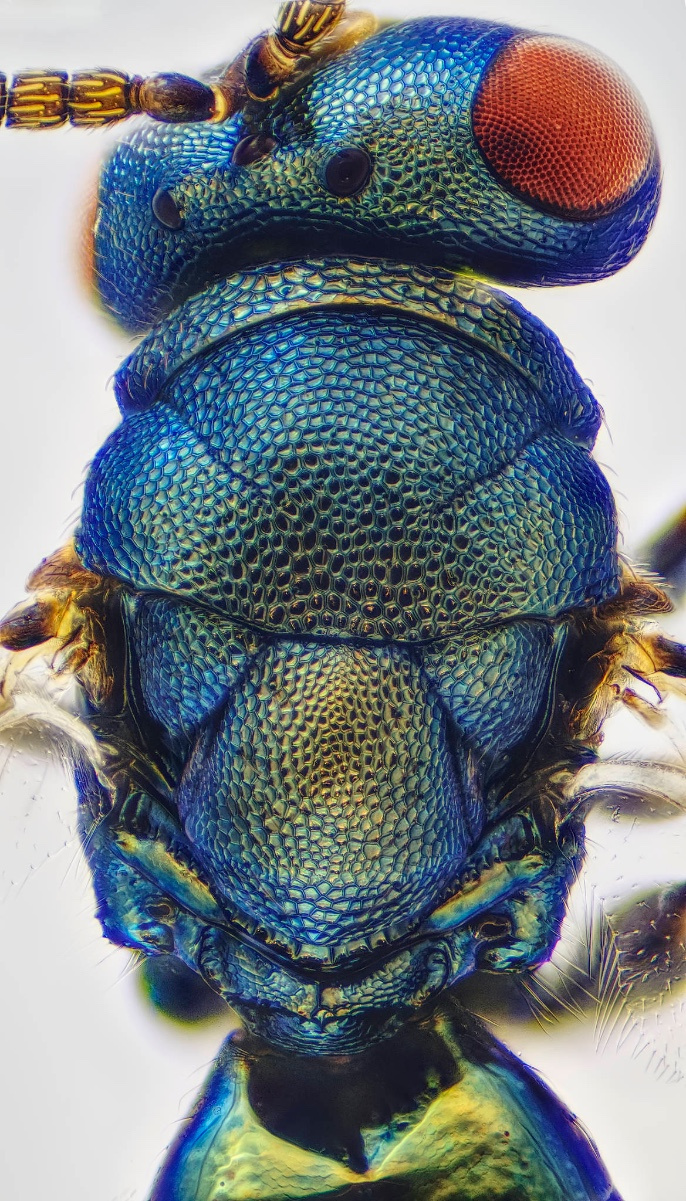
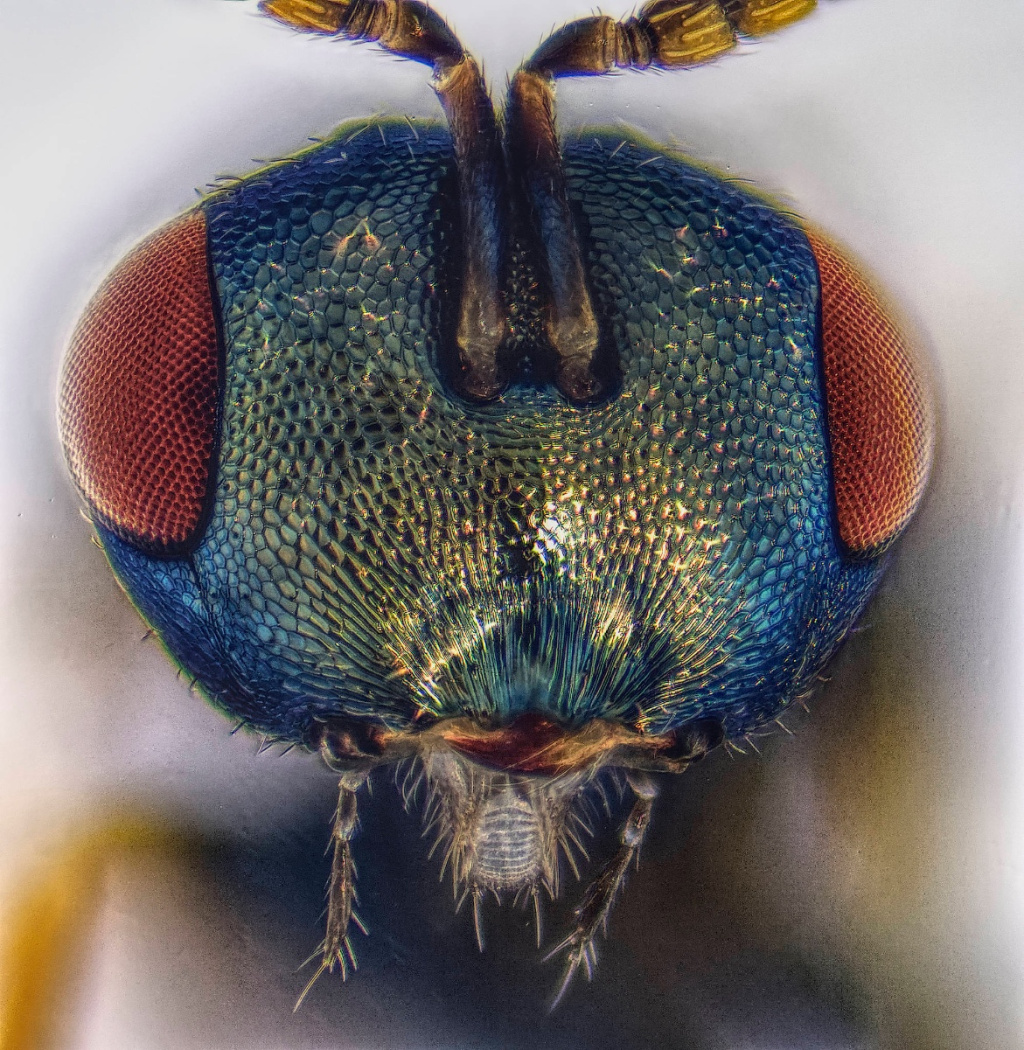
About 50 species identified so far in the UK. 1-5mm in length, typically metallic green, bronze, or bluish-black. Some species feature contrasting yellow or testaceous (brick-red) legs. The clypeus (the lower plate of the face above the mouth) is usually emarginate notched) or truncate (straight), rather than heavily toothed. Antennae geniculate (elbowed) and sexually dimorphic. They generally consist of 13 segments: a long basal scape, a pedicel, 2 or 3 tiny ring-like segments (anelli), 5 or 6 larger funicular segments, and a 3-segmented club (clava) at the tip. The propodeum (the first abdominal segment that is fused to the rear of the thorax) is heavily reticulated (net-like texture). It usually features a distinct central ridge (median carina), lateral folds (plicae), and a pronounced nucha (a neck-like posterior extension connecting to the abdomen). The forewings have highly reduced venation., the marginal vein is elongate, and the postmarginal vein is typically as long as or longer than the marginal vein. The wings also feature a speculum — a distinct, hairless, transparent patch near the base of the wing.

Unless identified by a recognised expert, a photo is required and the specimen should be examined with a microscope. In the comments box, state the key or ID method used and describe the size and identifying characters.
All year.
Pteromalus species are parasitoids, and idiobionts, meaning the female wasp permanently paralyzes or arrests the development of the host when she lays her eggs (c.f. konobionts, where host development continues while the parasitoid is feeding on it). Many species are gregarious endoparasitoids -a single female will inject dozens of eggs into a single host pupa. The genus has an exceptionally broad host range, primarily targeting holometabolous insects (those that undergo complete metamorphosis), including Lepidoptera, Coleoptera and Diptera. Some Pteromalus species act as hyperparasitoids, laying their eggs inside the larvae or pupae of other parasitoid wasps. Adults forage for floral nectar and aphid honeydew.
Widespread.
Hugely under recorded.
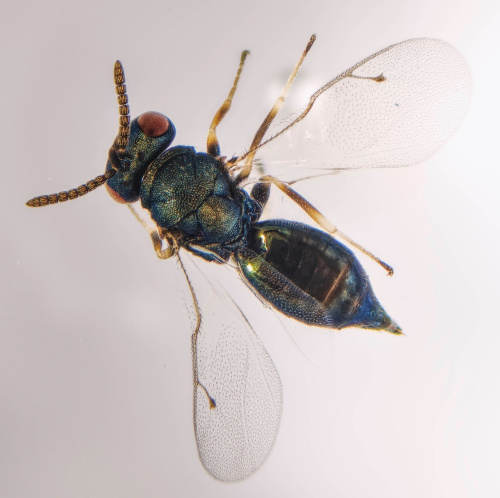 AJ Cann
Merrys Meadows
24 May 2026
female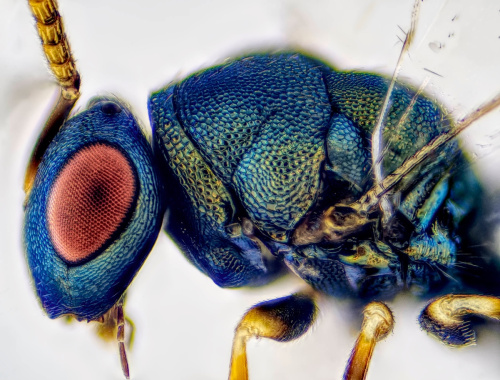 AJ Cann
Merrys Meadows
24 May 2026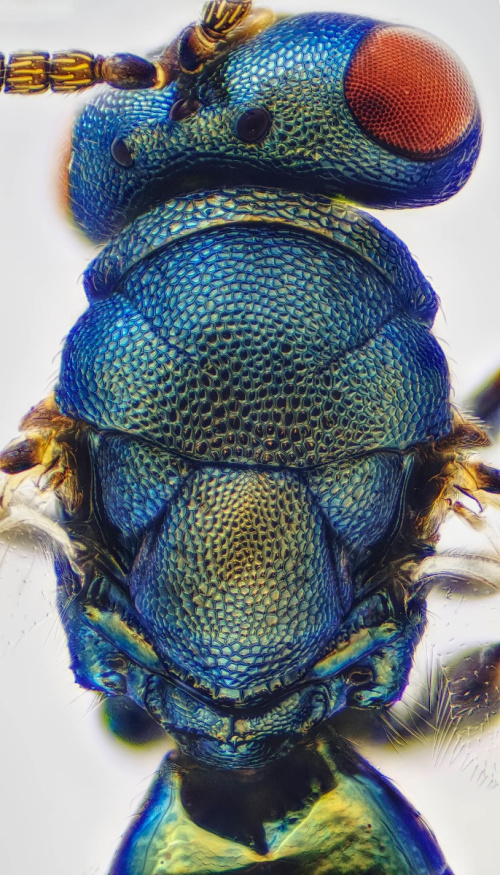 AJ Cann
Merrys Meadows
24 May 2026
throax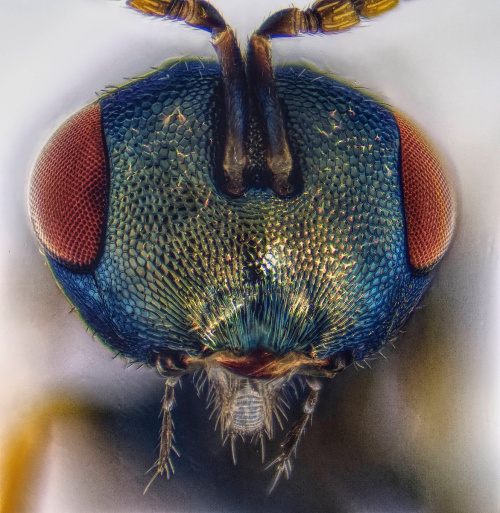 AJ Cann
Merrys Meadows
24 May 2026
Leicestershire & Rutland Map
Enter a town or village to see local records
MAP KEY:
Yellow squares = NBN records (all known data)
Coloured circles = NatureSpot records: 2025+ | 2020-2024 | pre-2020
UK Map
Species profile
- Species group:
- insect - hymenopteran
- Kingdom:
- Animalia
- Order:
- Hymenoptera
- Family:
- Pteromalidae
- Records on NatureSpot:
- 0
Total records by month
% of records within its species group
10km squares with records
The latest images and records displayed below include those awaiting verification checks so we cannot guarantee that every identification is correct. Once accepted, the record displays a green tick.
In the Latest Records section, click on the header to sort A-Z, and again to sort Z-A. Use the header boxes to filter the list.