
All images on this website have been taken in Leicestershire and Rutland by NatureSpot members. We welcome new contributions - just register and use the Submit Records form to post your photos. Click on any image below to visit the species page. The RED / AMBER / GREEN dots indicate how easy it is to identify the species - see our Identification Difficulty page for more information. A coloured rating followed by an exclamation mark denotes that different ID difficulties apply to either males and females or to the larvae - see the species page for more detail.
Bees, Wasps, Ants
Parasitoid and chalcid wasps - Chalcidoidea
Chalcid wasps (from the Latin, "chalcis" - metallic-coloured) are a very complex and species-rich group with constantly evolving taxonomy. In the UK, 1,754 recorded species were on the 2016 checklist, although this is certainly an underestimate of the total. All are endoparasitoids, the females laying eggs inside host eggs or larvae, which their larvae consume and kill. These tiny wasps often have a wide global distribution and in addition have been very widely used as biological pest control.
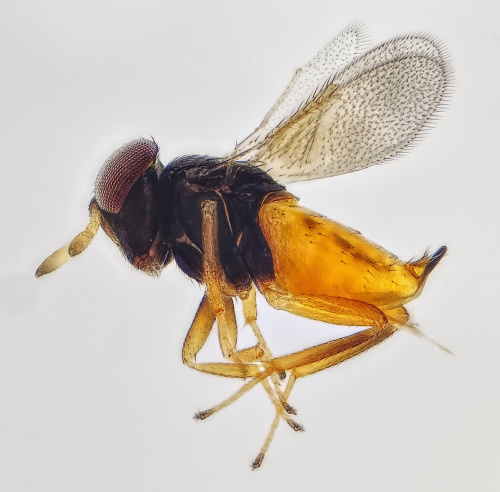
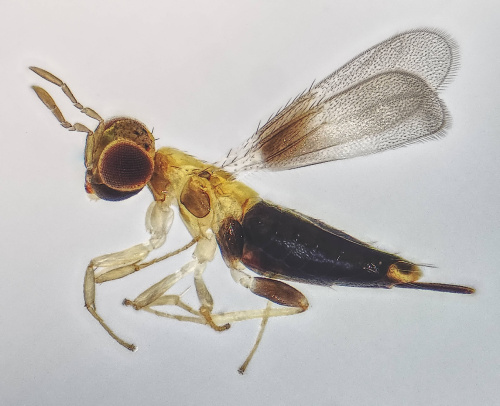
Aphelinidae
The Aphelinidae are some of the smaller chalcid wasps. Most aphelinids are less than 1.5 mm in length and brown or yellow in color. They are characterised by the antenna having four or less funicular segments, the tarsi with 4–5 segments, the fore tibial spur large, curved and bifid, the metasoma broadly joined to the thorax (not petiolate), and the notauli complete, straight, deep, and widely separated posteriorly (generally by more than the length of the scutellum). Most species are Most are primary parasitoids of Sternorrhyncha. Others attack eggs of these groups or of Orthoptera (grasshoppers and crickets). Many of the 1,300+ species in the family parasitize agriculturally important insects including whiteflies, scale insects, mealybugs and aphids.

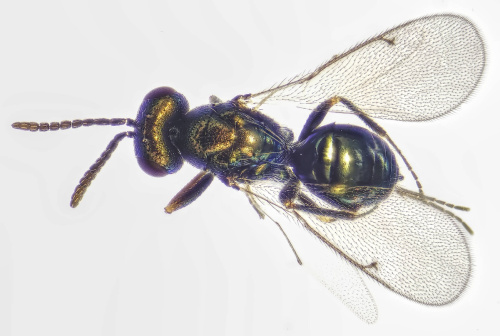
Chalcididae - Chalcid wasps
The family Chalcididae is a subgroup group within the superfamily Chalcidoidea. Chalcididae are generally slightly larger, sturdier and have a more "armored" appearance than other Chalcidid families. The hind femur is greatly enlarged and muscular and the hind tibiae characteristically bowed to fit snugly against the swollen femur when the leg is retracted.


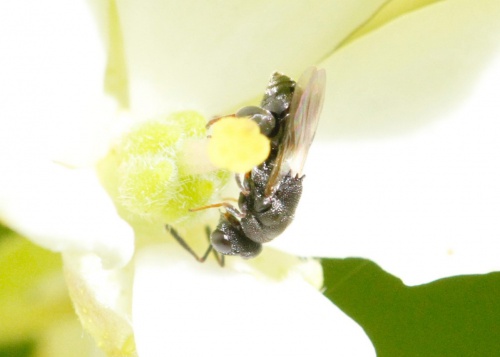
Dryinidae
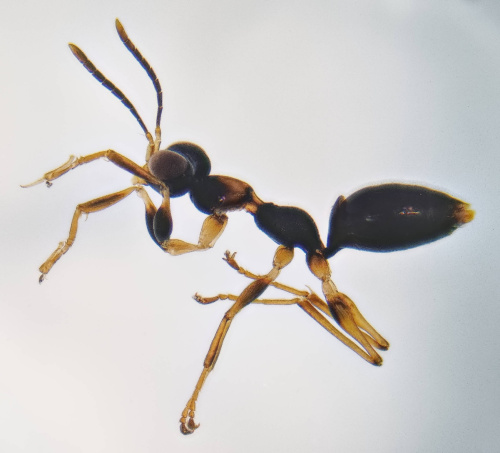
Solitary parasitoid wasps belonging to the family Dryinidae (Pincer Wasps). Wingless ant-like females have specialized, scissor-like front legs with raptorial claws used to capture and parasitize leafhopper or planthopper nymphs.
Encyrtidae
A large family of tiny wasps and one of the most important for biological control. e.g. Trichogramma evanescens is used to control Clothes Moths and Encarsia formosa used to control greenhouse whitefly - these are among the few wasps you can buy on Amazon.
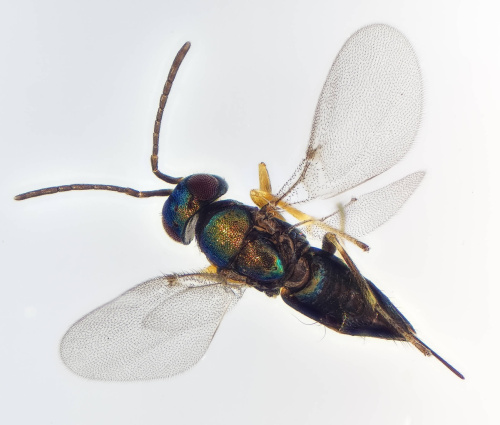
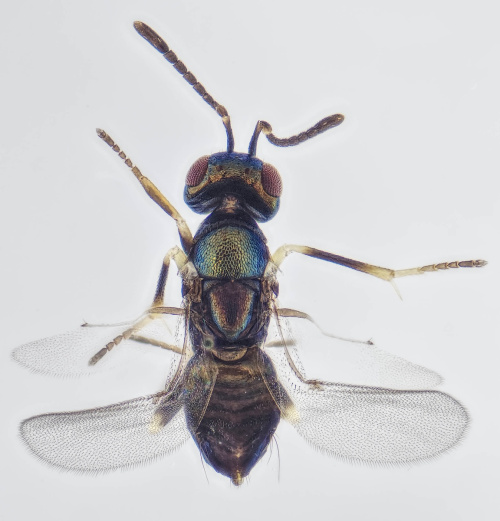
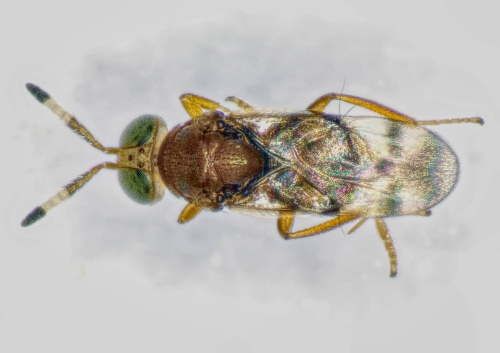

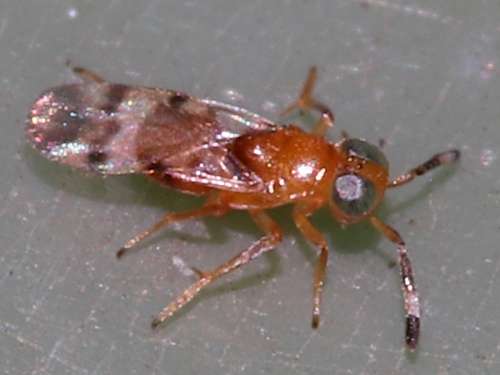
Eulophidae
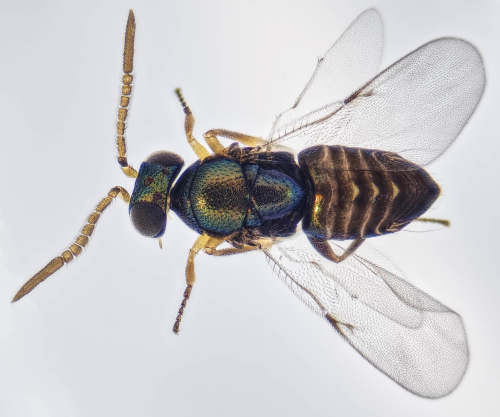
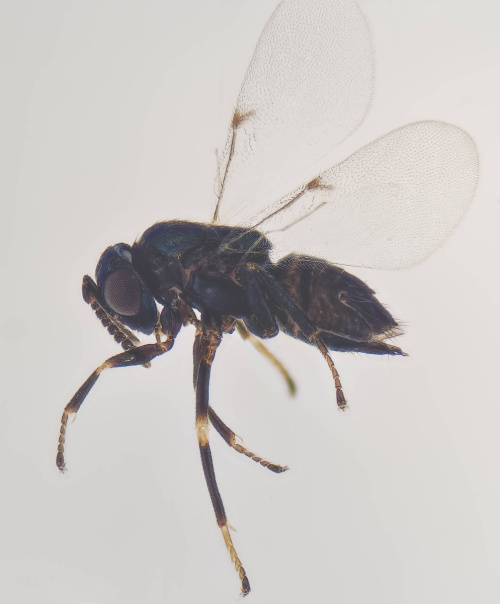
Eulophid wasps are endoparasites larvae, pupae and sometimes eggs of insects in over ten orders. They are major parasitoids of Leafminers (Diptera), Lepidoptera, Coleoptera, and Hemiptera. They are crucial in natural ecosystems and Integrated Pest Management (IPM) for controlling various insect pests, particularly leaf miners, beetles, and gall-formers. A few species cause plant galls.
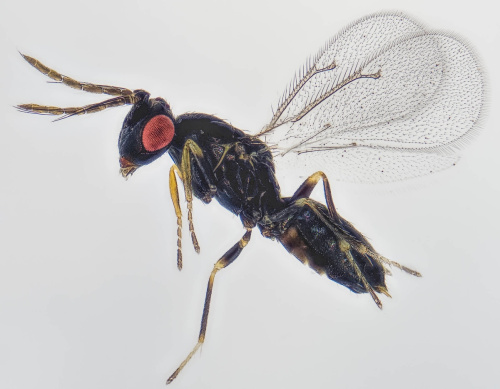
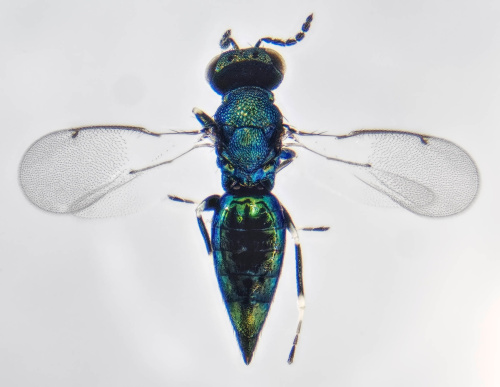
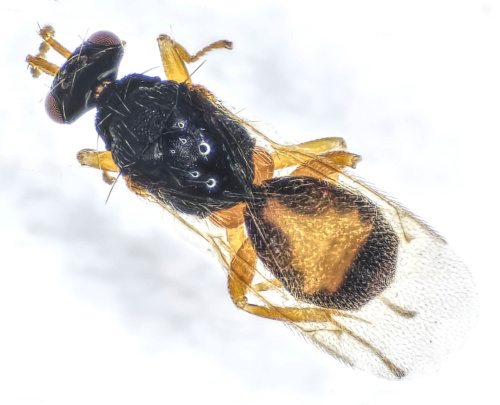
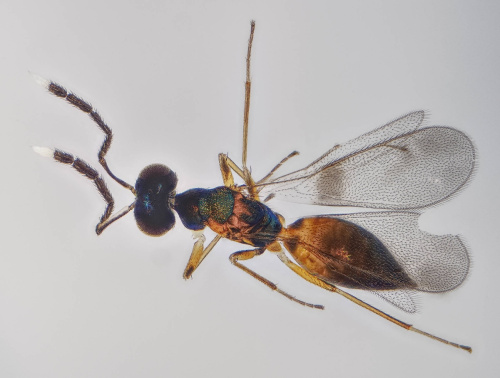
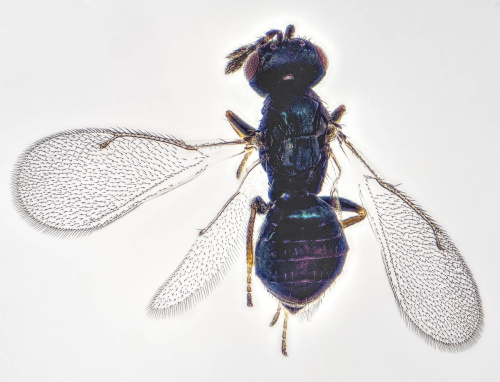
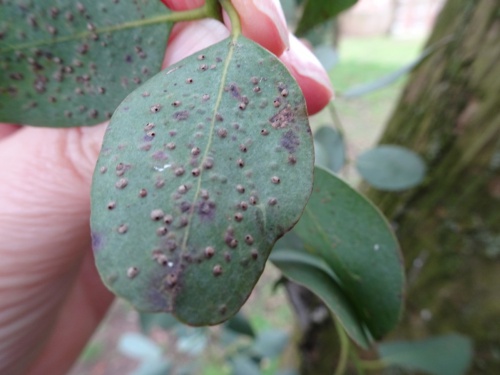

Eurytomidae - wasps
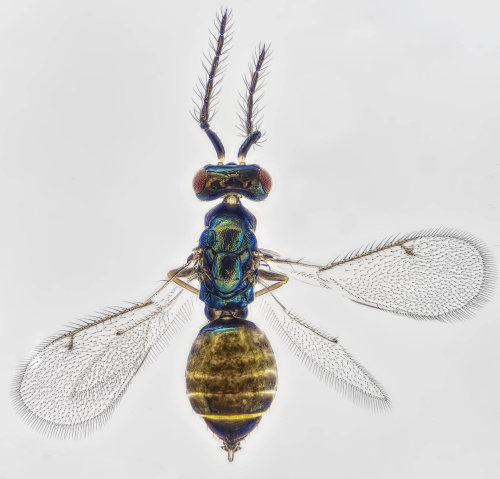
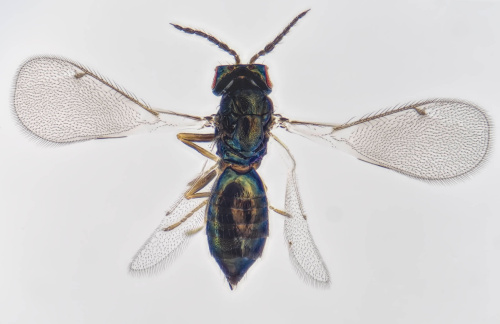
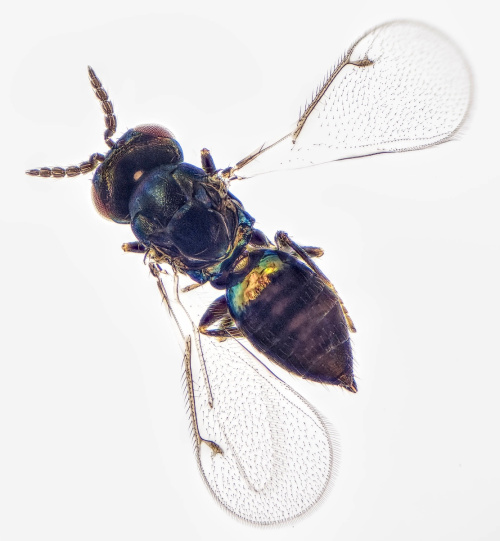
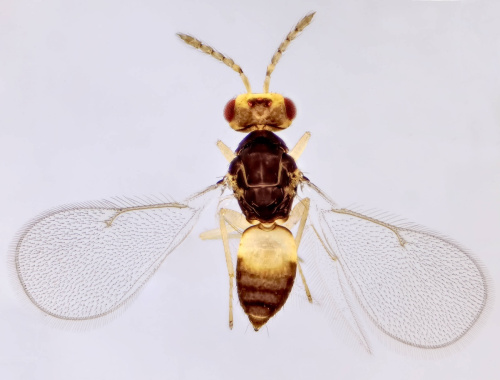
Eurytomidae are a diverse family of small, primarily non-metallic, black or dark-colored parasitic and phytophagous wasps. They are characterized by a coarse, pitted thorax. While many are parasites of larvae hidden within plant tissues (galls, seeds, stems), a significant number are phytophagous (feeding on plants), and some are specialized predators of spider eggs.
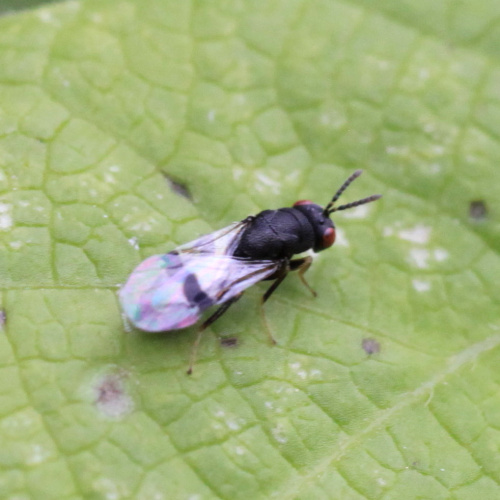
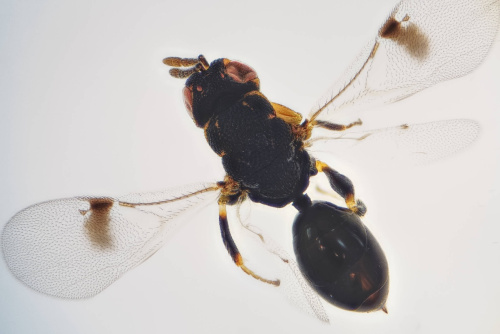
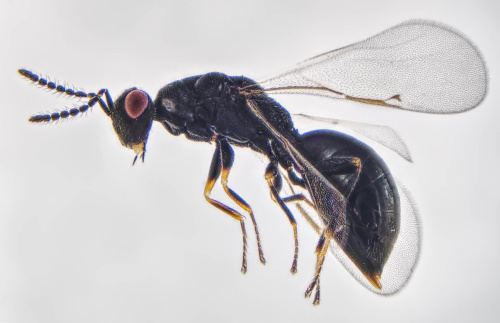
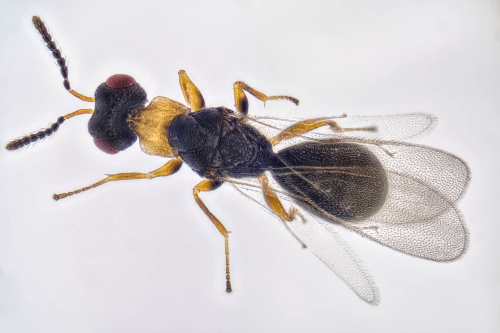
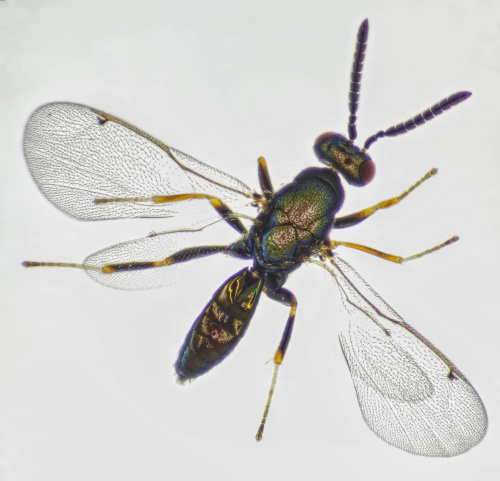
Ormyridae - parasitic wasps
The Ormyridae are either parasitoids or hyperparasitoids on gall-forming insects, primarily cynipid wasps and tephritid flies, typically metallic or iridescent in appearance.
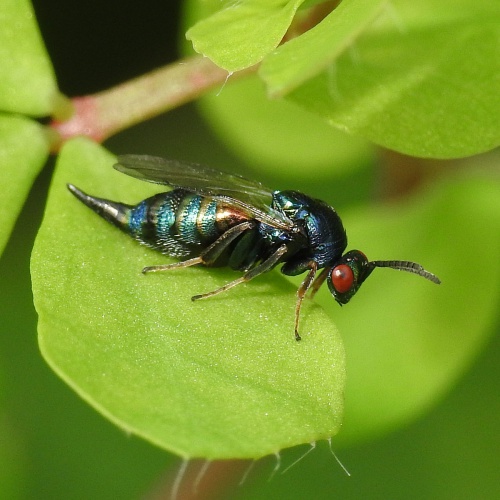
Mymaridae - Fairy wasps
The fairy wasps are some of the smallest insects in the world but have been widely used in biological pest control. One North American species, Dicopomorpha echmepterygis, is only twice the width of a human hair. They are endoparasitoids on a wide range of insect hosts. One UK species, Caraphractus cinctus, lives underwater and is a parasitoid of water beetle eggs.
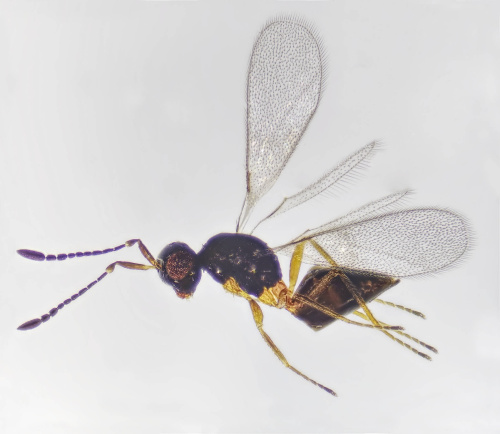
Pteromalidae
This is a very large and diverse family of wasps (one of the most species-rich families) of rather uncertain taxonomy, having been included in other families and split off again a number of times. Their biology is very varies and includes ectoparasitoids and endoparasitoids, hyperparasitoids and even predators that kill and consume the prey immediately; they also include fig wasp genera.
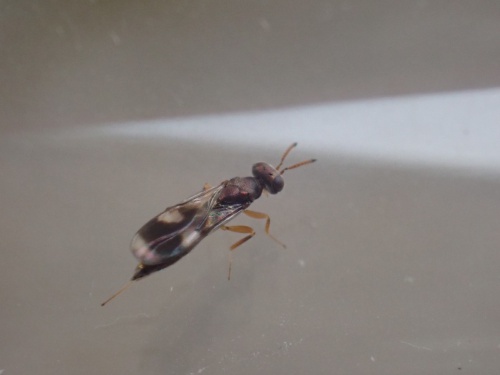
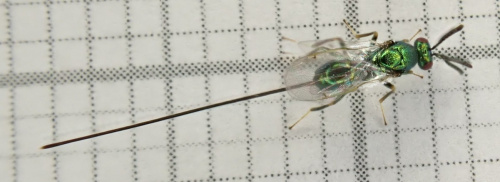
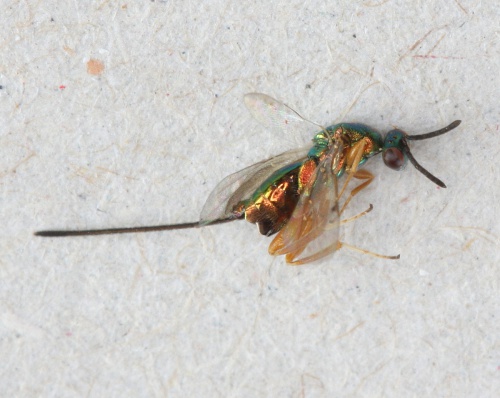
Torymidae
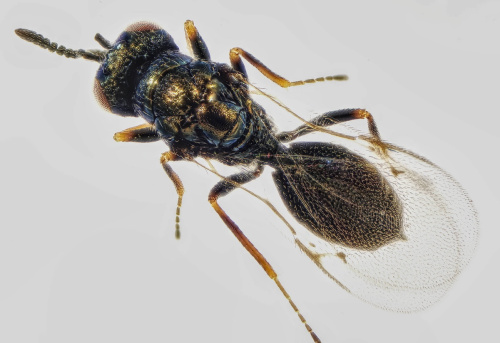
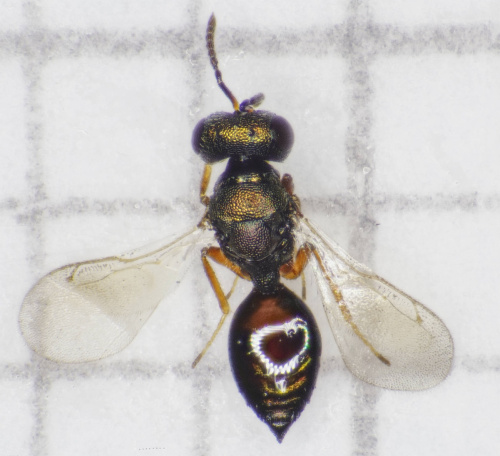
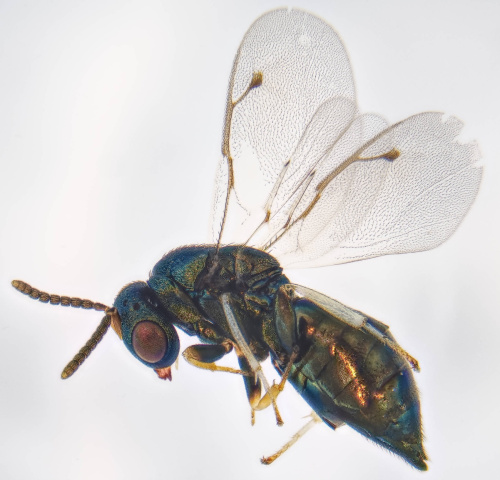
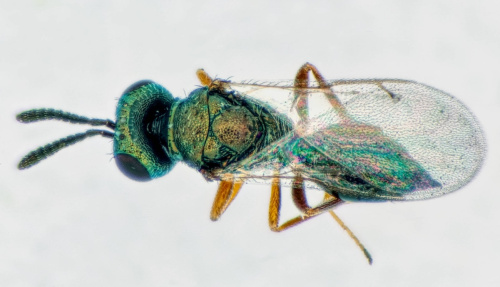
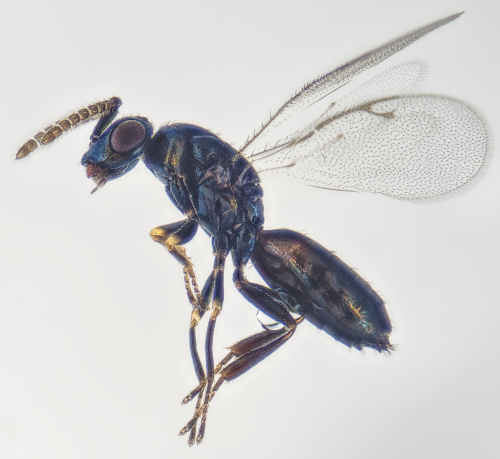
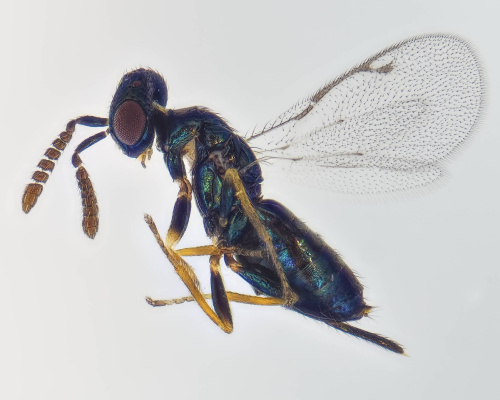
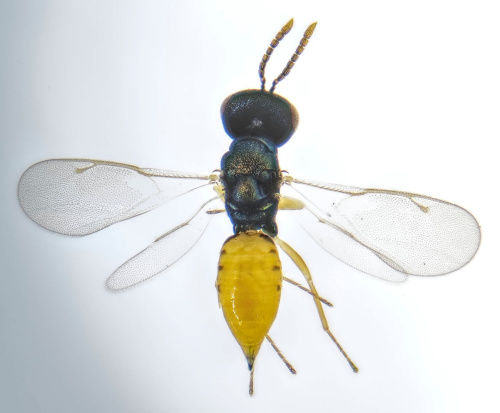
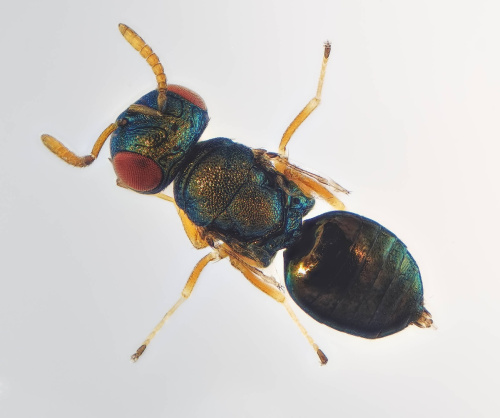
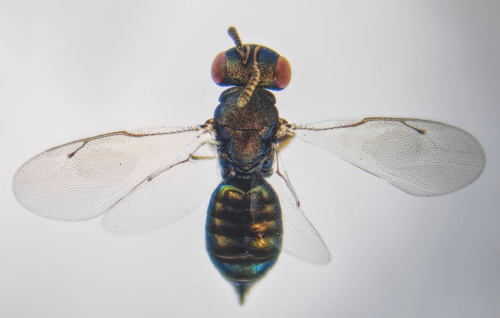
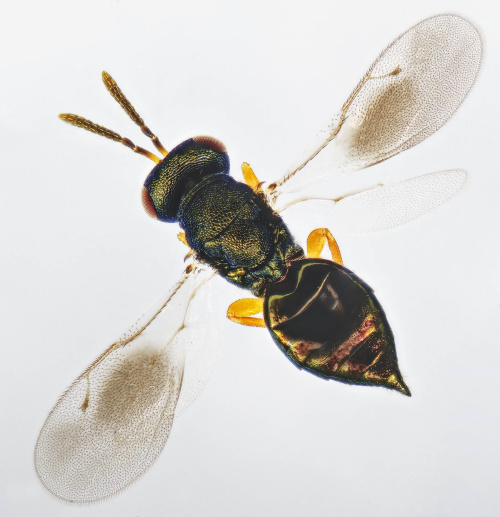
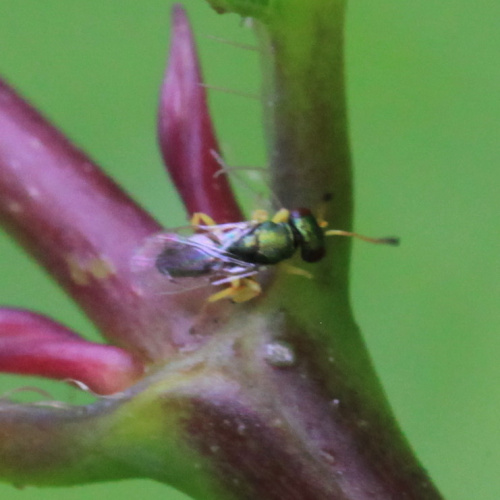
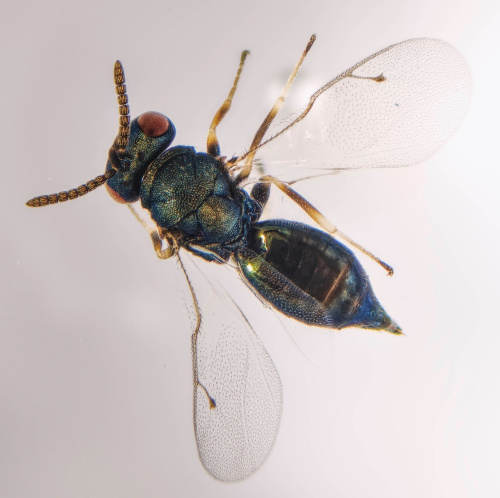
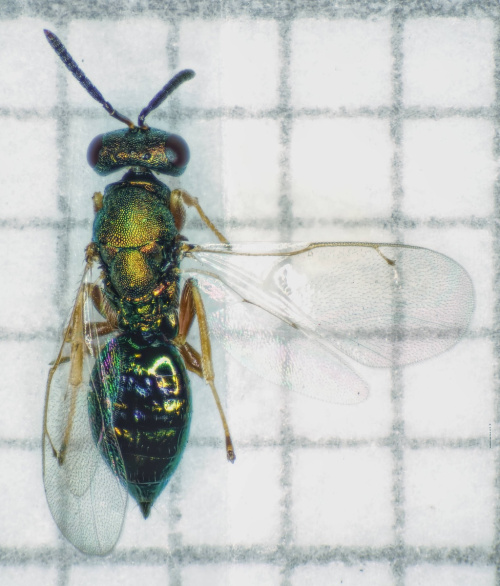
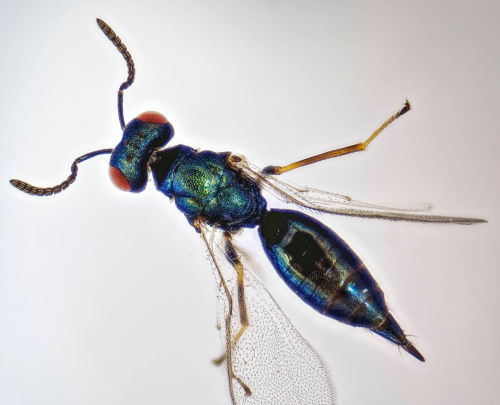
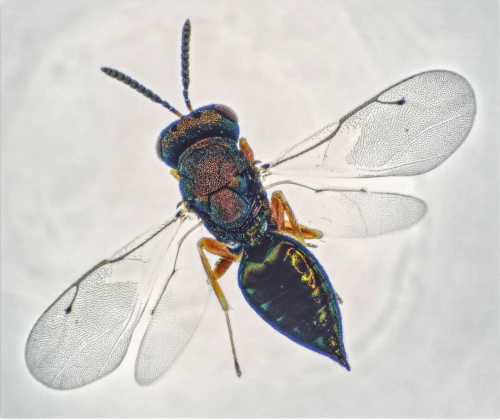
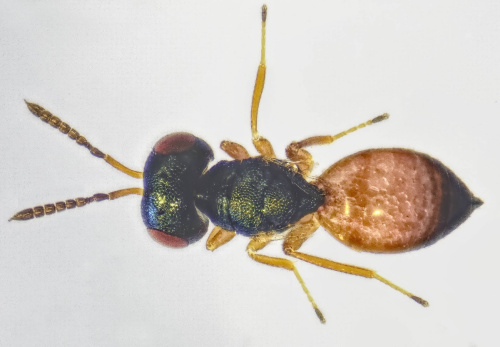
A diverse family of chalcid wasps that can be recognized by their metallic body color, large hind coxae and long ovipositor in females, which is used to deposit eggs onto or into their hosts. Torymidae specialize in parasitizing hosts in concealed habitats including gall-forming insects. This is an extremely difficult group to identify with over 100 UK species, the best chance is if they are reared or emerging from a particular host.